

Most nutrition advice focuses on what to eat. But a growing body of research suggests that how you eat matters too: how fast, in what order, and whether you keep track.
The best part? These habits don't require a special diet, expensive foods or giving up the meals you love. They're small adjustments you can start at your next meal.
In part one of this series, we looked at the hidden triggers that make us eat when we're not hungry. In this second part, we turn to four practical habits and what the research actually says about each one, including where the evidence is strong and where it's still developing.
1. Slow down your meals
It takes time for your body to register that you've eaten, and eating fast may outrun those signals.
A 2021 systematic review and meta-analysis examined 15 human studies on eating speed, with a meta-analysis of 7 of them [1]. The researchers found that eating slowly was a protective factor against excessive food intake [1].
They also looked at specific techniques that slow eating and reduce how much people eat. These included [1]:
- Taking small bites with a small spoon
- Serving dishes on separate plates
- Using a fork that vibrates when you eat too quickly
- Eating harder-textured foods that need more chewing
The authors concluded that eating slowly can reduce excessive food and energy intake [1].
Try it: Put your fork down between bites, choose a smaller spoon, or add crunchy vegetables that take a little longer to chew. Aim to make your meal last a few minutes longer than usual.
2. Include protein at meals
Protein has a reputation for being filling, and the research largely backs that up, at least in the short term.
A 2020 meta-analysis of randomized controlled trials in healthy adults compared meals with more protein to meals with the same number of calories but less protein [2]. It included 49 publications on short-term (acute) effects and 19 on long-term effects. In the short term, protein [2]:
- Reduced hunger, desire to eat and how much people expected to eat
- Increased feelings of fullness and satiety
- Lowered ghrelin (a hormone linked to hunger)
- Raised cholecystokinin and GLP-1 (hormones linked to fullness)
The honest caveat: in the long-term trials, eating more protein didn't change these appetite outcomes (apart from a decrease in GLP-1), and the authors called the long-term results inconclusive [2].
Try it: Build each meal around a protein source you enjoy, such as eggs, yogurt, beans, lentils, tofu, fish or chicken. It may help you feel satisfied after that meal, even if the long-term effects are still being studied.
3. Eat your veggies and protein before your carbs
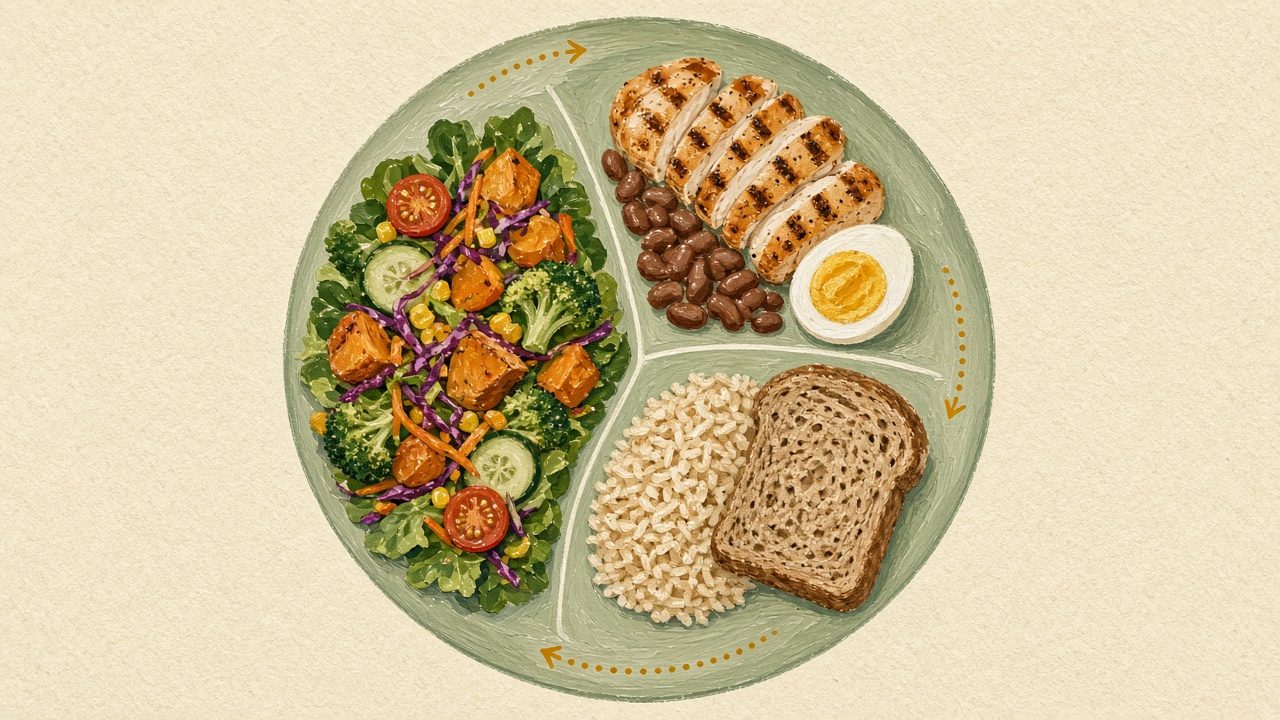
This one is surprisingly simple: same plate, same food, just a different order.
A 2023 systematic review looked at 11 reports of short-term experiments in which people ate the same meal with the foods in a different order [3]. In every report that measured them, glucose and insulin tended to be lower over at least part of the after-meal period when carbohydrates were eaten last [3]. GLP-1, a fullness-related hormone, also tended to be higher with carbs last, though only a few studies measured it [3].
The authors rated the effect on blood glucose and insulin as the most consistent finding, at moderate certainty [3]. But two important caveats:
- These were acute studies looking at single meals, not long-term weight loss.
- Feelings of hunger and fullness weren't consistently different between meal orders, and the certainty of that evidence was very low [3].
Try it: Start your meal with the salad or vegetables, then the protein, and finish with the rice, bread or pasta. If you have diabetes or take glucose-lowering medication, talk to your doctor before changing how you eat.
4. Keep track of what you eat and how you move
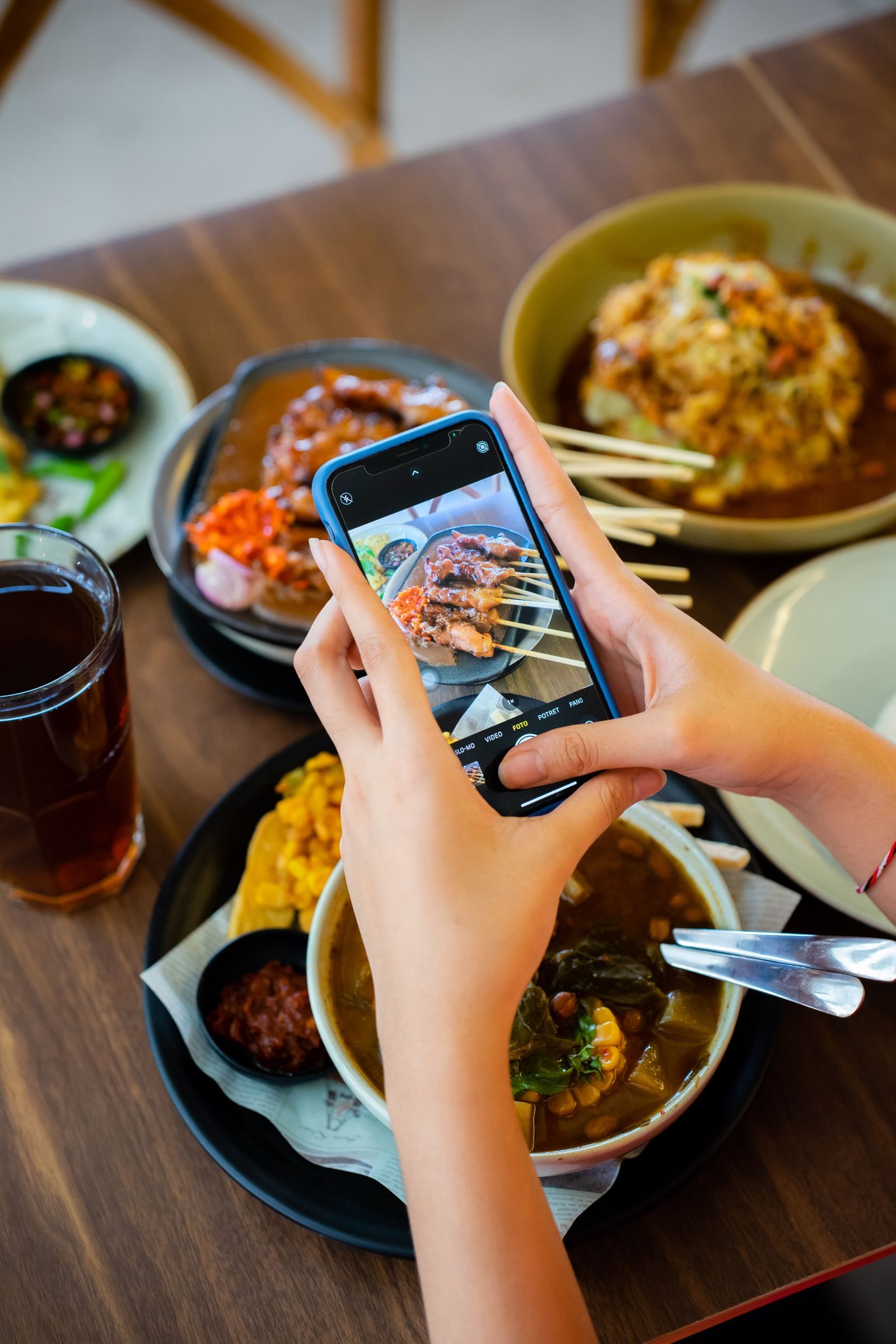
Tracking can feel tedious, but it's one of the better-supported habits on this list.
A 2021 systematic review and meta-analysis pooled 12 randomized controlled trials, with 1,190 participants in total, on digital self-monitoring of both diet and physical activity in adults with overweight or obesity [4]. The studies ran from three to 12 months and used apps, websites, text messages or combinations of these [4]. Compared with approaches that didn't include digital self-monitoring of both behaviors, it led to [4]:
- About 2.9 kg (roughly 6.3 lb) more weight loss on average
- A significant increase in moderate physical activity
- About 182 fewer calories per day in self-reported intake (the authors advise caution with this result, since intake was self-reported)
One more finding stood out: programs that gave tailored advice were significantly more effective than those that didn't, with an average of about 4.5 kg (9.9 lb) of extra weight loss compared with about 2.1 kg (4.6 lb) for non-tailored programs [4].
Try it: Log your meals and activity in whatever way feels easiest, whether that's an app, quick photos of your plates or a simple note on your phone. Consistency matters more than perfection.
Practical takeaways
- Add a few minutes to each meal. Fork down between bites, smaller spoon, more chewing.
- Anchor meals with protein. It helps with short-term fullness [2].
- Carbs last. It's an easy switch that may soften after-meal blood sugar rises [3].
- Track lightly but consistently. Digital self-monitoring is linked with greater weight loss [4].
- Pick one habit to start. Trying all four at once can be overwhelming. Master one, then add the next.
- Personalize it. Tailored approaches worked better in the research [4], so adapt these ideas to your tastes, culture and schedule.
Building habits that last
Small, repeatable habits like these add up over time, especially when you can see your own progress. Viivaa helps you build these everyday habits one step at a time, so healthy eating feels simple and sustainable.
Next in the series: whether you can train your brain to choose healthier food.
This article is for general information only and isn't medical advice. Please talk to your doctor or another qualified health professional about your individual health, weight, or any changes to your diet or activity, especially if you have diabetes or another medical condition.
References
- Sáenz-Pardo-Reyes E, Housni FE, López-Espinoza A, Martínez Moreno AG, Padilla Galindo MDR, Velázquez Saucedo G. Efecto de las técnicas y estrategias de modificación de la velocidad al comer sobre la ingesta de alimentos o energía: revisión sistemática y metaanálisis [Effect of eating speed modification techniques and strategies on food or energy intake: a systematic review and meta-analysis]. Nutr Hosp. 2021;38(3):631–644. https://doi.org/10.20960/nh.03467 (article in Spanish)
- Kohanmoo A, Faghih S, Akhlaghi M. Effect of short- and long-term protein consumption on appetite and appetite-regulating gastrointestinal hormones, a systematic review and meta-analysis of randomized controlled trials. Physiol Behav. 2020;226:113123. https://doi.org/10.1016/j.physbeh.2020.113123
- Ferguson BK, Wilson PB. Ordered eating and its effects on various postprandial health markers: a systematic review. J Am Nutr Assoc. 2023;42(8):746–757. https://doi.org/10.1080/27697061.2022.2161664
- Berry R, Kassavou A, Sutton S. Does self-monitoring diet and physical activity behaviors using digital technology support adults with obesity or overweight to lose weight? A systematic literature review with meta-analysis. Obes Rev. 2021;22(10):e13306. https://doi.org/10.1111/obr.13306