
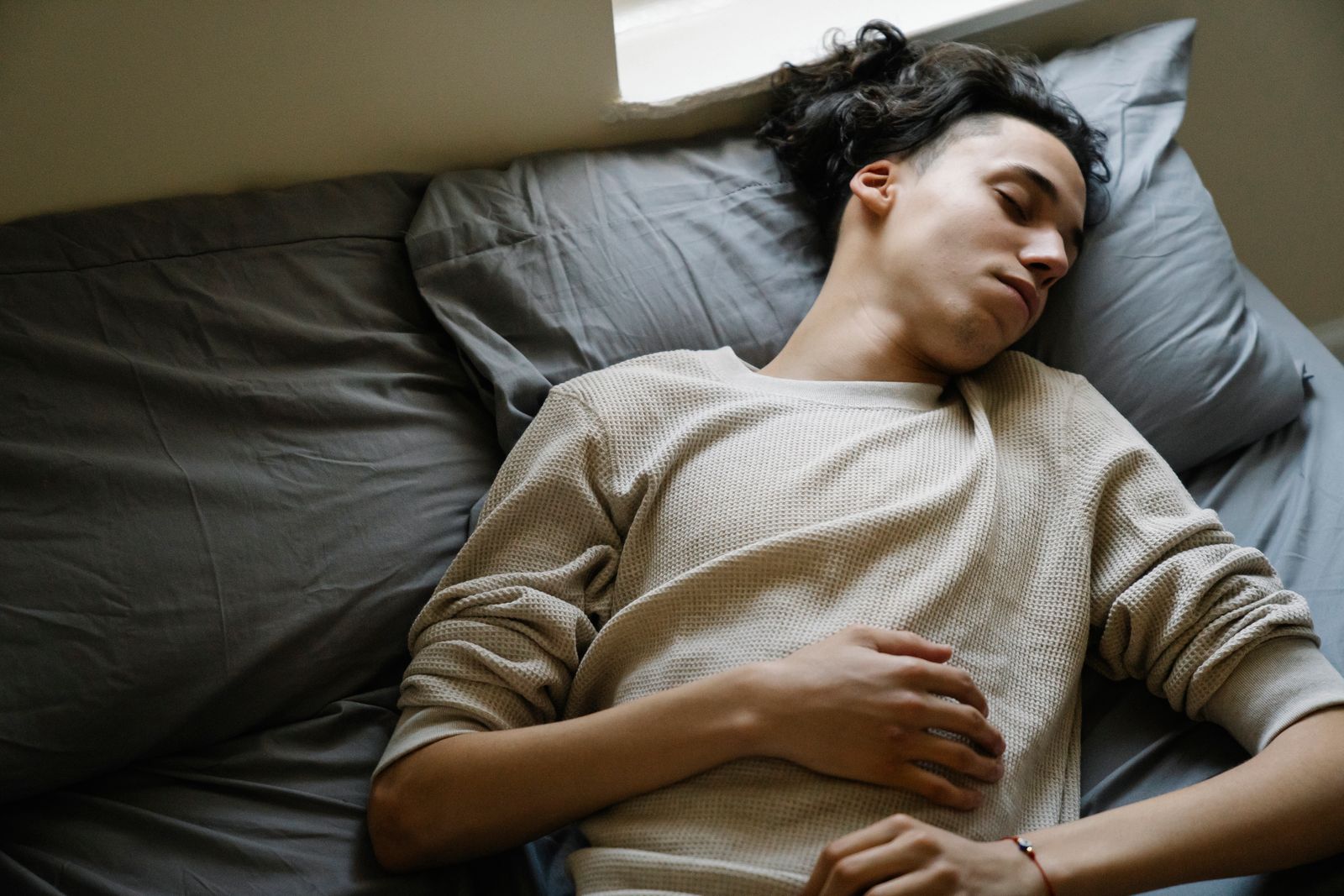
Sleep and exercise are two of the habits most often linked to testosterone. Some of those links are real, some are exaggerated, and one popular gym belief doesn't hold up at all.
Here's what controlled studies show about how sleep and training affect male hormones, and what that means for everyday life.
Testosterone and the sleep cycle
Testosterone follows a daily rhythm. Levels rise during sleep and are usually highest in the morning, which is why guidelines recommend testing testosterone with an early-morning blood sample [1, 2].
That rhythm also hints at why short sleep might matter.
What happens when you cut sleep short?
In a much-cited laboratory study at the University of Chicago, 10 healthy young men (average age 24) spent a week limited to five hours in bed per night. Their actual sleep fell from almost nine hours to under five [2].
By the end of the week, their daytime testosterone had dropped by 10–15%, from about 18.4 to 16.5 nmol/L (roughly 531 to 476 ng/dL). The biggest drop was in the afternoon and evening. The men also rated their sense of vigour lower as the week went on [2]. Cortisol, a stress hormone often blamed in this context, did not change. The authors compared the size of the drop with normal ageing, in which testosterone falls by about 1–2% a year, making a week of short sleep roughly comparable to several years of ageing for this hormone [2].
This is a striking result, but it comes from only 10 healthy young men in a laboratory, over a single week. It doesn't tell us what happens over months, or in older men and men with health conditions. So it helps to look at the wider evidence.
The bigger picture: partial versus total sleep loss
A 2021 meta-analysis pooled 18 studies with 252 men. It found a clear distinction [3]:
- Total sleep deprivation of 24 hours or more (pulling an all-nighter or longer) consistently lowered testosterone.
- Short-term partial sleep restriction (sleeping less than usual for a few nights) did not have a statistically significant effect overall.
So the honest summary is this: going without sleep entirely clearly lowers testosterone, while the effect of a few short nights is smaller and less certain. Chronic short sleep is still worth fixing, for energy, mood, appetite and long-term health, even if it isn't the single cause of low testosterone.
Sleep apnoea: worth knowing about
Obstructive sleep apnoea, in which breathing repeatedly stops and starts during sleep, is common in men, especially with excess weight. It matters for hormone treatment, too: the Endocrine Society recommends against starting testosterone therapy in men with untreated severe sleep apnoea [1]. If you snore loudly, stop breathing at night or wake up exhausted, mention it to your doctor.
Training: does lifting raise testosterone?
Hard exercise, especially heavy work with large muscle groups, causes a short-lived rise in testosterone and other hormones. Many people assume this spike is what builds muscle. Two well-designed studies suggest otherwise.
In one, 12 young men trained one arm in a way that caused no hormone rise and the other arm followed by heavy leg exercise to cause a big hormone rise. After 15 weeks, muscle size grew by 12% and 10% respectively, with no difference between the arms, and strength gains were similar too [4].
In another, 49 experienced lifters trained for 12 weeks. There was no link between the size of each man's post-workout hormone rise and his gains in muscle or strength [5].
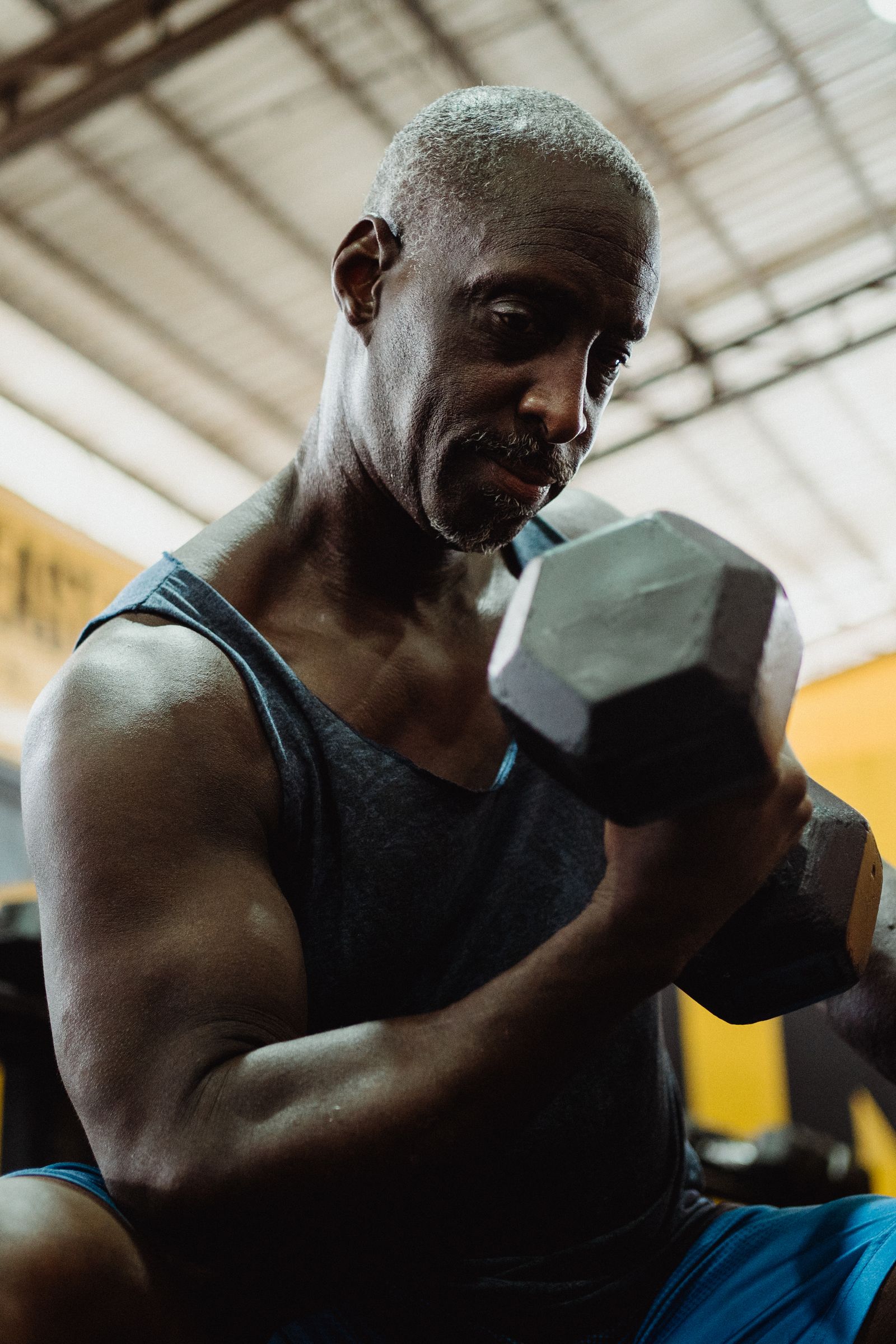
The same study found that lifting lighter or heavier loads produced similar muscle growth, as long as each set was taken close to fatigue [5]. The practical message: train for health, strength and enjoyment, at any age, and don't design workouts around chasing a hormone spike.
When training lowers testosterone
At the other extreme, very heavy training can lower testosterone. A review of exercise-related low testosterone describes two patterns [6]:
- Short-term, linked to low energy availability (too little energy left for the body's basic functions once the cost of training is covered) (not eating enough to cover training) or overtraining. This is usually temporary and improves with more food, more rest or both.
- Longer-term, seen in some men after years of very high-volume endurance training, which the author calls the "Exercise Hypogonadal Male Condition".
The International Olympic Committee's 2023 consensus on Relative Energy Deficiency in Sport (REDs) recognises that low energy availability can harm health and performance in male as well as female athletes, though the research in men is more limited [7].
Warning signs include persistent fatigue, falling performance, low sex drive, frequent illness or injuries, and weight loss you didn't plan.
In practice
- Protect a regular sleep window with enough time in bed to wake up rested.
- Avoid routine all-nighters where you can; they clearly lower testosterone [3].
- Get snoring and breathing pauses checked, especially before any hormone treatment [1].
- Strength-train for health, not for hormone spikes [4, 5].
- Eat enough to fuel your training, and build in rest days. If performance and libido both drop, consider under-fuelling or overtraining [6, 7].
- See a doctor about persistent exhaustion rather than simply pushing harder or adding supplements.
Small changes, consistent results
Better sleep and sustainable training are habits, not hacks. Viivaa helps you build healthy habits one small step at a time, so progress feels steady and sustainable.
This article is for general information only and isn't medical advice. Talk to your own doctor before starting or stopping any hormone treatment, and about any sleep or breathing problems.
References
- Bhasin S, Brito JP, Cunningham GR, et al. Testosterone therapy in men with hypogonadism: an Endocrine Society clinical practice guideline. J Clin Endocrinol Metab. 2018;103(5):1715–1744. https://doi.org/10.1210/jc.2018-00229
- Leproult R, Van Cauter E. Effect of 1 week of sleep restriction on testosterone levels in young healthy men. JAMA. 2011;305(21):2173–2174. https://doi.org/10.1001/jama.2011.710
- Su L, Zhang SZ, Zhu J, Wu J, Jiao YZ. Effect of partial and total sleep deprivation on serum testosterone in healthy males: a systematic review and meta-analysis. Sleep Med. 2021;88:267–273. https://doi.org/10.1016/j.sleep.2021.10.031
- West DWD, Burd NA, Tang JE, et al. Elevations in ostensibly anabolic hormones with resistance exercise enhance neither training-induced muscle hypertrophy nor strength of the elbow flexors. J Appl Physiol. 2010;108(1):60–67. https://doi.org/10.1152/japplphysiol.01147.2009
- Morton RW, Oikawa SY, Wavell CG, et al. Neither load nor systemic hormones determine resistance training-mediated hypertrophy or strength gains in resistance-trained young men. J Appl Physiol. 2016;121(1):129–138. https://doi.org/10.1152/japplphysiol.00154.2016
- Hackney AC. Hypogonadism in exercising males: dysfunction or adaptive-regulatory adjustment? Front Endocrinol (Lausanne). 2020;11:11. https://doi.org/10.3389/fendo.2020.00011
- Mountjoy M, Ackerman KE, Bailey DM, et al. 2023 International Olympic Committee's (IOC) consensus statement on Relative Energy Deficiency in Sport (REDs). Br J Sports Med. 2023;57(17):1073–1098. https://doi.org/10.1136/bjsports-2023-106994