
In the first part of this series, we looked at how much water you actually need. This time, we're tackling the claims that travel fastest: that coffee dries you out, that alkaline water fights cancer, that cold drinks are bad during exercise, and that more water is always better.
Here is what the research says about each one.
Myth 1: "Coffee dehydrates you"
This one sounds logical. Caffeine has a mild diuretic effect, so coffee must cost you more water than it gives, right?
A carefully controlled study tested exactly that. Fifty men who habitually drank 3 to 6 cups of coffee a day completed two 3-day trials. In one, they drank four 200 mL cups of coffee a day, providing 4 mg of caffeine per kilogram of body weight; in the other, the same volume of water. Food, fluid and activity were controlled [1].
The researchers measured total body water with a tracer method, as well as blood and urine markers of hydration. They found no differences between the coffee and water trials. Total body water was essentially identical (51.5 vs 51.4 kg), and so was 24-hour urine volume (2,409 vs 2,428 mL) [1]. The authors concluded that, in moderation and in people used to caffeine, coffee hydrates about as well as water [1].
Verdict: for regular coffee drinkers having moderate amounts, the evidence doesn't support the dehydration claim. Note that the study included only men who were already used to caffeine, so it doesn't tell us about very high intakes or people who rarely drink coffee.
Myth 2: "Alkaline water prevents or treats cancer"
Alkaline water and "alkaline diets" are often marketed as a way to change the body's pH and protect against cancer.
A systematic review set out to find the evidence. Out of 8,278 citations, the researchers reviewed 252 abstracts, and only one study met their criteria. They found no randomised trials and no studies at all on alkaline diets or alkaline water for treating cancer. The single included study found no link between dietary acid load and bladder cancer [2].
The authors' conclusion was direct: promoting an alkaline diet or alkaline water to the public for cancer prevention or treatment is not justified [2].
Verdict: there is no good evidence for this claim. If you enjoy alkaline water, it's still water, but it shouldn't be bought for its supposed health effects.
Myth 3: "Cold drinks are bad for you during exercise"
Some people avoid cold water when they work out, believing it shocks the body or slows performance.
Research on exercise in the heat points the other way. A systematic review of studies on beverage temperature found that 3 of the 7 studies analysed reported that cold fluids helped limit the rise in core body temperature, and in the 4 studies that tested performance, it improved by 10% with cold fluids. The authors noted, however, that the findings were mixed [3].
A second review looked at how much people drink. In all 10 studies that measured taste preference, cold (0–10 °C) or cool (10–22 °C) drinks were preferred over warmer ones. In the studies that measured intake, people drank about 50% more when the drink was cold or cool, and dehydration during exercise was reduced by 1.3% of body weight [4].
Verdict: for most healthy people, cool drinks during exercise are not harmful and may help you drink enough, especially in hot conditions.
Myth 4: "Hydration doesn't change when you start keto"
When people switch to a ketogenic diet, many report a cluster of short-lived symptoms during the first days, sometimes called "keto flu". A 2025 scoping review described commonly reported transient symptoms, including nausea, vomiting, reduced appetite and low blood sugar, and also noted possible effects such as a higher risk of kidney stones [5].
The review found a physiological rationale for supplementing electrolytes during this transition, but also a lack of clinical studies showing whether it actually helps [5]. In other words, the idea is plausible, but not yet proven.
Verdict: starting keto can bring temporary symptoms, and fluid and electrolyte balance may play a part. If you have a medical condition or take medication, talk to your doctor before making a big dietary change.
Myth 5: "You can't drink too much water"
You can. Drinking far more than your body loses can dilute the sodium in your blood, a condition called hyponatraemia. During exercise, it's defined as a blood sodium concentration below the laboratory's normal range, usually under 135 mmol/L [6].
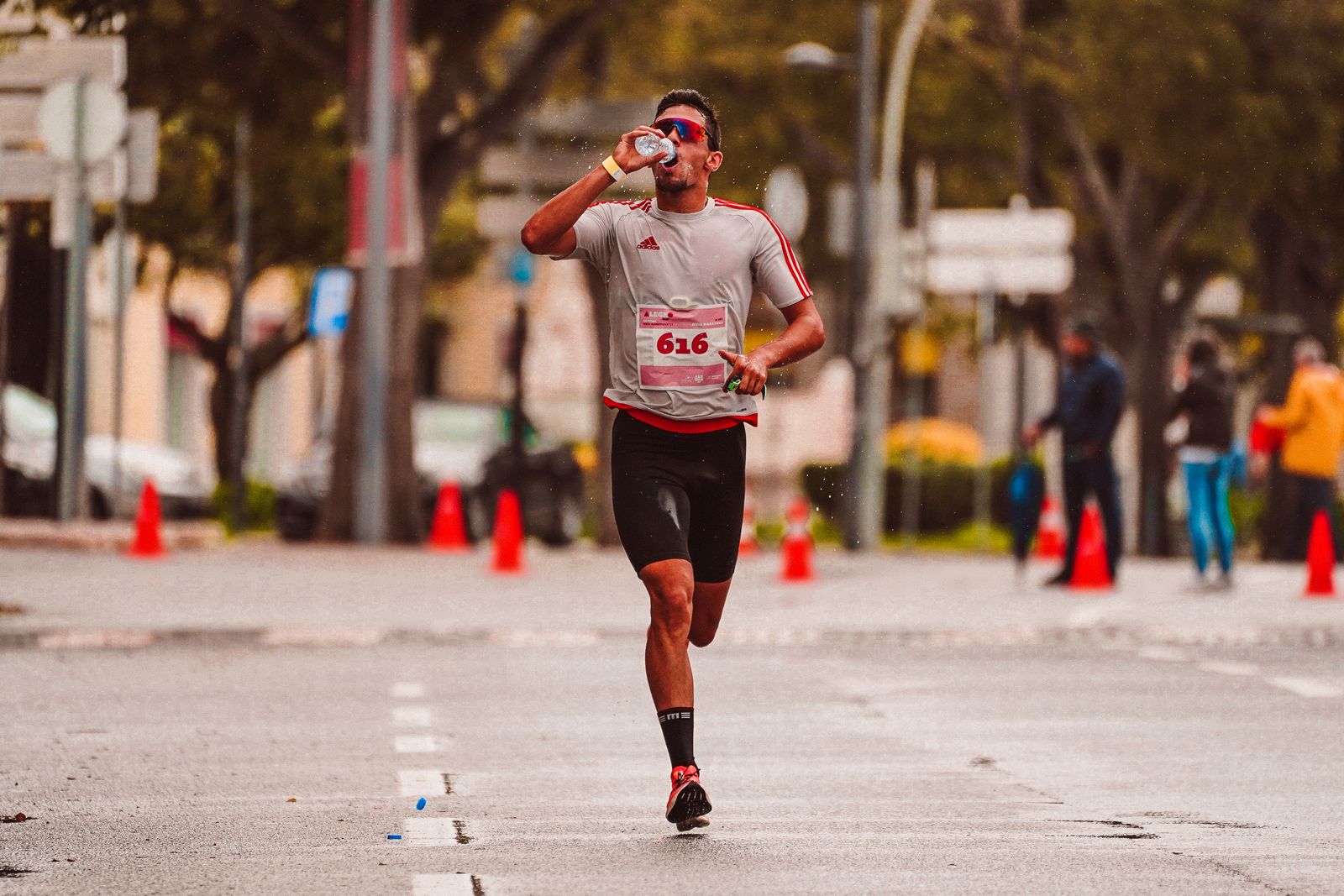
An international consensus statement on exercise-associated hyponatraemia identified the main cause as sustained overdrinking, combined with hormonal changes that make it harder for the kidneys to clear the extra water [6]. Listed risk factors include drinking too much water or sports drinks, gaining weight during exercise and exercising for more than four hours [6].
The consensus recommends using thirst as your guide: it should be enough to prevent excessive dehydration while markedly reducing the risk of hyponatraemia [6]. Sports-medicine guidance also points out that sweat rates vary a lot from person to person; weighing yourself before and after exercise can help estimate your own losses, and the aim is to avoid losing more than about 2% of body weight from a water deficit [7].
Verdict: more water isn't always better. For everyday life and most exercise, drinking to thirst works well.
In practice
- Your usual coffee counts towards your daily fluids.
- Choose water for hydration, not for marketing claims about pH.
- Cool drinks during exercise are fine and may help you drink enough in the heat.
- If you're starting a very low-carbohydrate diet, expect some adjustment, and ask your doctor about electrolytes if you have a health condition.
- During long events, drink to thirst rather than forcing fluids.
Small habits, steady progress
Good hydration is less about rules and more about paying attention to your body. Viivaa helps you build these healthy habits one small step at a time, so progress feels steady and sustainable.
This article is for general information only and isn't medical advice. If you have heart, kidney or liver disease, take medicines that affect fluid balance, or have been told to limit fluids, follow your doctor's guidance on how much to drink.
References
- Killer SC, Blannin AK, Jeukendrup AE. No evidence of dehydration with moderate daily coffee intake: a counterbalanced cross-over study in a free-living population. PLoS One. 2014;9(1):e84154. https://doi.org/10.1371/journal.pone.0084154
- Fenton TR, Huang T. Systematic review of the association between dietary acid load, alkaline water and cancer. BMJ Open. 2016;6(6):e010438. https://doi.org/10.1136/bmjopen-2015-010438
- Burdon CA, O'Connor HT, Gifford JA, Shirreffs SM. Influence of beverage temperature on exercise performance in the heat: a systematic review. Int J Sport Nutr Exerc Metab. 2010;20(2):166–74. https://doi.org/10.1123/ijsnem.20.2.166
- Burdon CA, Johnson NA, Chapman PG, O'Connor HT. Influence of beverage temperature on palatability and fluid ingestion during endurance exercise: a systematic review. Int J Sport Nutr Exerc Metab. 2012;22(3):199–211. https://doi.org/10.1123/ijsnem.22.3.199
- Skartun O, Smith CR, Laupsa-Borge J, Dankel SN. Symptoms during initiation of a ketogenic diet: a scoping review of occurrence rates, mechanisms and relief strategies. Front Nutr. 2025;12:1538266. https://doi.org/10.3389/fnut.2025.1538266
- Hew-Butler T, Rosner MH, Fowkes-Godek S, et al. Statement of the Third International Exercise-Associated Hyponatremia Consensus Development Conference, Carlsbad, California, 2015. Clin J Sport Med. 2015;25(4):303–20. https://doi.org/10.1097/JSM.0000000000000221
- Sawka MN, Burke LM, Eichner ER, Maughan RJ, Montain SJ, Stachenfeld NS. American College of Sports Medicine position stand. Exercise and fluid replacement. Med Sci Sports Exerc. 2007;39(2):377–90. https://doi.org/10.1249/mss.0b013e31802ca597