
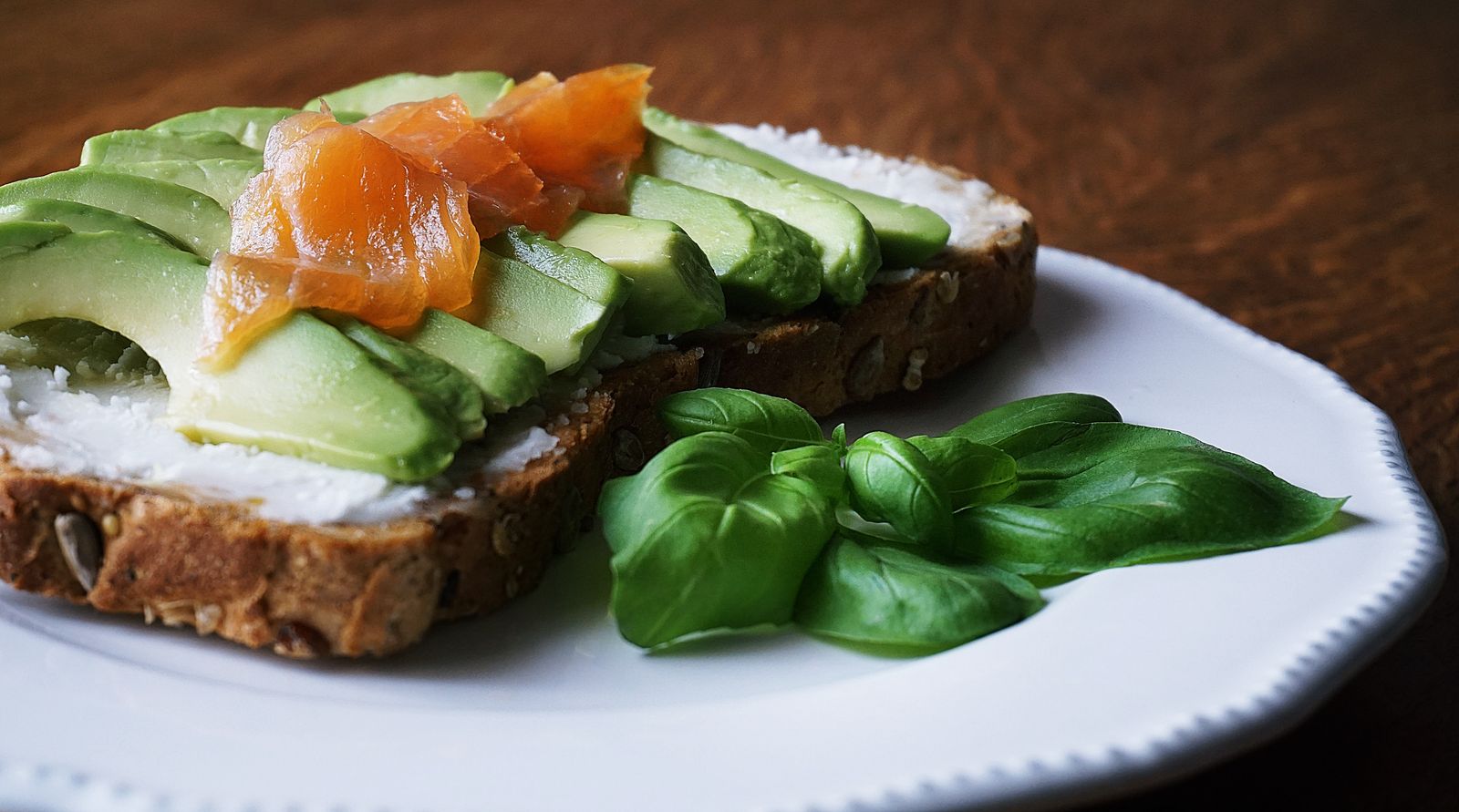
For decades, fat was treated as the enemy of weight loss. Today, many people hear the opposite: eat more fat and you'll stay full for hours. The science sits somewhere in between. Dietary fat does send real "slow down" signals from your gut to your brain, but it is also the most energy-dense nutrient on your plate, and that changes the picture.
Here's what peer-reviewed research says about how fat is digested, how it influences fullness, and how it connects to your metabolism and hormones.
What happens when you eat fat
Fat doesn't dissolve in water, so your body has to work harder to absorb it than it does for sugars. In the small intestine, fats are first broken down (hydrolysed) into smaller pieces. The cells lining the intestine, called enterocytes, take up these products, rebuild them into fat molecules and package them into particles called chylomicrons. These are exported into the lymphatic system before reaching the bloodstream [1].
This same pathway carries fat-soluble vitamins, such as vitamin E, which is one reason a meal with some fat helps your body make use of them [1]. In other words, fat isn't just fuel: it's also a delivery system.
Fat, CCK and the feeling of fullness
Two different ideas are often mixed up:
- Satiation is what makes you stop eating during a meal.
- Satiety is how long you stay satisfied before you're hungry again.
One of the best-studied gut signals involved in satiation is cholecystokinin (CCK), a hormone produced in the upper small intestine. A classic set of experiments showed how fat links to it. In three double-blind crossover studies, each with 12 healthy men, researchers infused fat directly into the duodenum (the first part of the small intestine) before lunch. The fat reduced how many calories the men ate. But when fat digestion was blocked with a lipase inhibitor, the effect disappeared. Only long-chain fatty acids reduced intake; medium-chain fatty acids did not. And when CCK receptors were blocked with a drug, the effect of long-chain fatty acids disappeared too [2].
So the fullness signal from fat depends on fat actually being digested, and it runs through CCK [2].
A 2023 systematic review and meta-analysis looked at 15 studies of CCK and its analogues. Of the 12 studies that measured how much people ate, 11 found a decrease. Even at normal, physiological levels, CCK had a significant effect on satiation (standardised mean difference 0.57) [3]. However, the review found no evidence that CCK leads to weight loss over the long term, and an oral CCK-like drug produced no weight loss at 24 weeks [3].
The takeaway: fat helps trigger a genuine fullness signal, but that signal alone doesn't guarantee lower calorie intake over weeks and months.
Why "fat keeps you full" is only half the story
A 2019 systematic review of 12 acute studies looked at dietary fat and fibre, alone and together, and their effects on satiation and satiety [4]. Its conclusion is worth knowing: because fat is so energy-dense, fat had a weak effect on satiation per unit of energy [4]. A small amount of fat delivers a lot of energy before fullness signals catch up.
The reviewers also explored whether pairing fat with fibre could help. In theory, fibre slows the absorption of nutrients, including fat, which could extend satiety. But their meta-analysis found no significant effect of combining fat and fibre, possibly because study designs weren't sensitive enough. They concluded that eating fat together with fibre-containing carbohydrates deserves further research [4].
In practice, this means fat can be part of a satisfying meal, but adding large amounts of it isn't a proven shortcut to eating less.
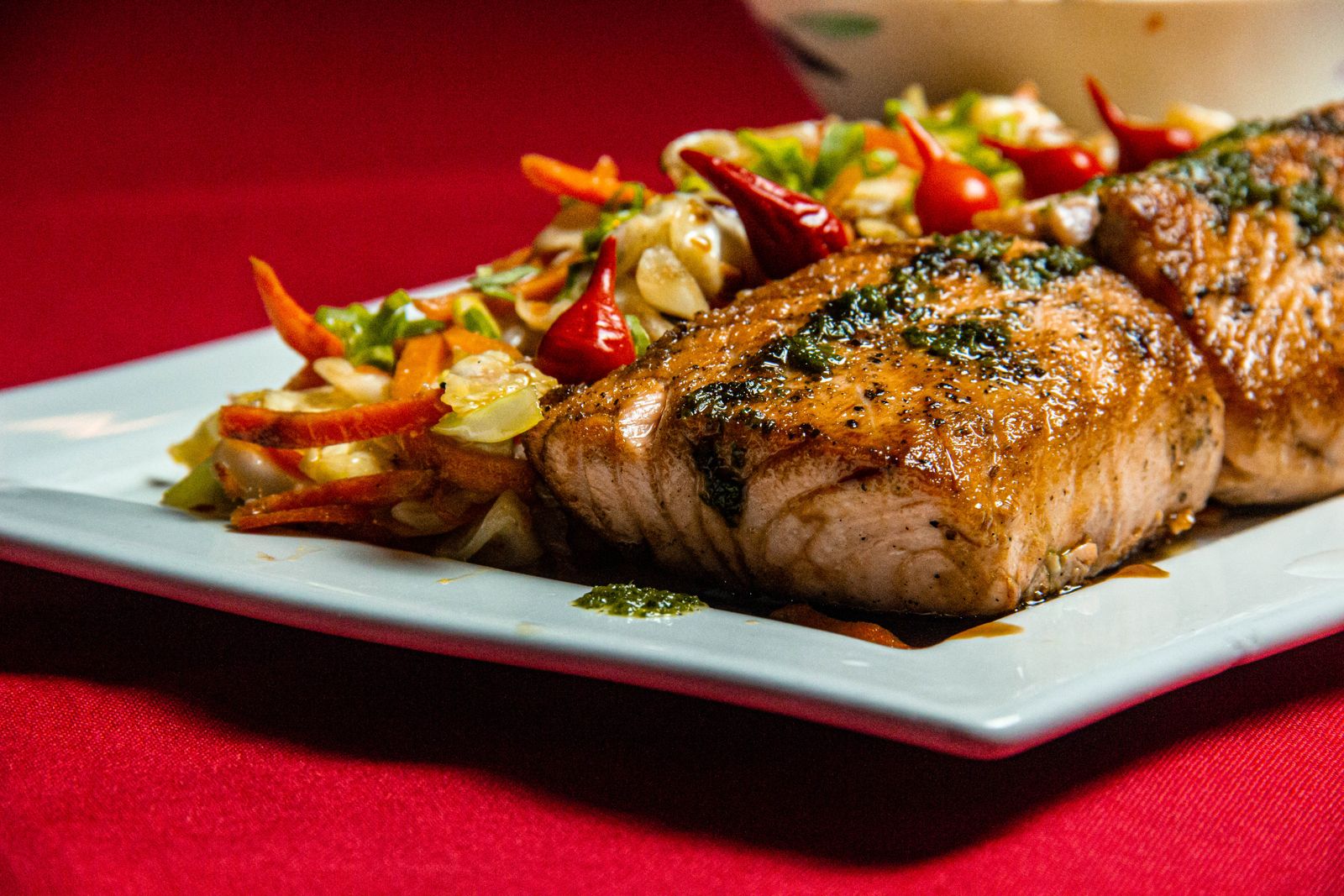
Fat as fuel: metabolic flexibility and mitochondria
Once absorbed, fat is a major fuel source. Metabolic flexibility describes the body's ability to adapt to changes in metabolic demand, including switching between glucose and fatty acids as fuel. Reduced flexibility, or metabolic inflexibility, is a feature of obesity and type 2 diabetes, and exercise physiology research has helped identify the mechanisms behind it [5].
Much of this fuel is burned in mitochondria, the energy-producing parts of your cells. Mitochondria have two membranes, and the makeup of these membranes matters for how well they work. A 2018 review describes how different dietary saturated and unsaturated fatty acids can modulate mitochondrial membrane structure and function, with a particular focus on long-chain omega-3 fatty acids [6]. The authors discuss implications for obesity, type 2 diabetes and fatty liver disease, but much of this work is mechanistic, so it explains how fats may act rather than proving that any single food changes health outcomes [6].
Your fat tissue talks: adipokines and hormones
Body fat isn't just storage. Adipose tissue is an active endocrine organ that releases many signalling molecules called adipokines, such as adiponectin and leptin. These signals reach the brain, liver, skeletal muscle and immune system, influencing blood pressure, lipid and glucose metabolism, and inflammation, and they are closely linked to insulin resistance [7].
Thyroid hormone is another important regulator of metabolism. A 2019 review explains that each tissue fine-tunes its own thyroid hormone signalling, mainly through enzymes called deiodinases that activate (T4 to T3) or inactivate the hormone inside cells. That's how thyroid hormone can regulate metabolism differently across tissues even when blood levels are fairly stable [8]. This doesn't mean any particular food "boosts" your thyroid; if you have concerns about thyroid function, that's a conversation for your doctor.
Practical takeaways
- Fat triggers real fullness signals through CCK, but only after it's digested [2].
- Because fat is energy-dense, it has a weak effect on satiation per calorie; portion awareness still matters [4].
- Pairing fat with fibre-rich foods is a reasonable idea, though evidence for extra satiety isn't yet clear [4].
- Fat also carries fat-soluble vitamins, so it has a place in a balanced diet [1].
- Your body fat and hormones are part of a complex system, so there's no single "fat switch" for weight loss [3, 7, 8].
Small steps, steady progress
Understanding how food works makes everyday choices easier. Viivaa helps you build healthy habits one small step at a time, so progress feels steady and sustainable.
This article is for general information only and is not medical advice. Talk to your doctor or a registered dietitian before making significant changes to your diet, especially if you have a medical condition or take medication.
References
- Iqbal J, Hussain MM. Intestinal lipid absorption. Am J Physiol Endocrinol Metab. 2009;296(6):E1183–E1194. https://doi.org/10.1152/ajpendo.90899.2008
- Matzinger D, Degen L, Drewe J, et al. The role of long chain fatty acids in regulating food intake and cholecystokinin release in humans. Gut. 2000;46(5):688–693. https://doi.org/10.1136/gut.46.5.689
- Warrilow A, Turner M, Naumovski N, Somerset S. Role of cholecystokinin in satiation: a systematic review and meta-analysis. Br J Nutr. 2023;129(12):2182–2190. https://doi.org/10.1017/S0007114522000381
- Warrilow A, Mellor D, McKune A, Pumpa K. Dietary fat, fibre, satiation, and satiety – a systematic review of acute studies. Eur J Clin Nutr. 2019;73(3):333–344. https://doi.org/10.1038/s41430-018-0295-7
- Goodpaster BH, Sparks LM. Metabolic flexibility in health and disease. Cell Metab. 2017;25(5):1027–1036. https://doi.org/10.1016/j.cmet.2017.04.015
- Sullivan EM, Pennington ER, Green WD, Beck MA, Brown DA, Shaikh SR. Mechanisms by which dietary fatty acids regulate mitochondrial structure-function in health and disease. Adv Nutr. 2018;9(3):247–262. https://doi.org/10.1093/advances/nmy007
- Rabe K, Lehrke M, Parhofer KG, Broedl UC. Adipokines and insulin resistance. Mol Med. 2008;14(11–12):741–751. https://doi.org/10.2119/2008-00058.Rabe
- Bianco AC, Dumitrescu A, Gereben B, et al. Paradigms of dynamic control of thyroid hormone signaling. Endocr Rev. 2019;40(4):1000–1047. https://doi.org/10.1210/er.2018-00275