

For decades, "low-fat" was printed on packaging like a health guarantee. Then the pendulum swung, and butter and coconut oil were suddenly superfoods. No wonder people feel confused.
The more useful question isn't whether fat is good or bad. It's which fats, in what amounts, and what they replace. Fat is an essential nutrient. The different types simply behave very differently in the body. Here is what the evidence shows.
The main types of fat, in brief
- Saturated fat is found mostly in fatty meat, butter, cheese and other full-fat dairy, and in some tropical oils.
- Trans fat comes mainly from partially hydrogenated oils, an industrial process that turns liquid oil into a solid fat. It also occurs naturally in meat and dairy from cows, sheep and goats, and the WHO considers both forms equally harmful [2].
- Monounsaturated fat is found in olive, canola and peanut oil, nuts and avocados [2].
- Polyunsaturated fat includes the omega-6 and omega-3 families. Sources include sunflower, corn, soybean and safflower oils, walnuts, seeds and oily fish [2].
Saturated fat: limit it, and replace it wisely
In 2023 the World Health Organization (WHO) published a guideline on saturated and trans fat for adults and children [1]. It makes three recommendations on saturated fat:
- Reduce saturated fat to 10% of total energy intake. This is a strong recommendation.
- Consider going below 10%. This is a conditional recommendation, because the evidence for lower intakes is more limited.
- Replace saturated fat with healthier options: polyunsaturated fat (strong recommendation), or monounsaturated fat from plant sources, or carbohydrates from foods with naturally occurring fibre, such as whole grains, vegetables, fruit and pulses (both conditional) [1].
That third point matters most in real life. Swapping butter for white bread or sugary snacks isn't the change the guideline describes. The benefit comes from what you eat instead.
On a 2,000-calorie day, 10% of energy works out to roughly 22 g of saturated fat (each gram of fat provides about 9 calories). Labels can help you get a feel for where yours comes from.
Trans fat: the one to avoid
Trans fat is the clearest case in nutrition science. According to the WHO [2]:
- Industrially produced trans fat is linked to more than 278,000 deaths a year worldwide.
- High trans fat intake is associated with a 34% higher risk of death from any cause, a 28% higher risk of death from coronary heart disease and a 21% higher risk of coronary heart disease.
- It has no known health benefits.
- Adults should keep trans fat below 1% of total energy, which is under 2.2 g a day on a 2,000-calorie diet.
The 2023 guideline makes the same 1% recommendation for adults and children, and advises replacing trans fat with polyunsaturated or plant-based monounsaturated fat [1].
The WHO lists margarine, vegetable shortening, vanaspati ghee, fried foods and baked goods such as crackers, biscuits and pies as common sources of industrially produced trans fat [2]. Many countries now restrict it, but checking ingredient lists for "partially hydrogenated" oil is still worthwhile.
Olive oil and nuts: the PREDIMED trial
PREDIMED is one of the largest diet trials ever run on heart health [3]. It enrolled 7,447 adults aged 55 to 80 in Spain who were at high cardiovascular risk but had no heart disease at the start. Participants were assigned to one of three diets:
- a Mediterranean diet supplemented with extra-virgin olive oil
- a Mediterranean diet supplemented with mixed nuts
- a control diet, with advice to reduce dietary fat
Over a median of 4.8 years, the main outcome was heart attack, stroke or death from cardiovascular causes. That happened to 3.8% of the olive oil group, 3.4% of the nut group and 4.4% of the control group [3]. Compared with the control diet, risk was about 31% lower with olive oil and about 28% lower with nuts.
One detail is worth knowing. The trial was first published in 2013. The researchers later found problems with how some participants were randomised, withdrew that report and republished revised results in 2018. The revised estimates pointed the same way [3].
The takeaway is not that more fat is always better. It's that a Mediterranean pattern rich in unsaturated plant fats did better than general advice to cut fat.
Omega-3s from seafood
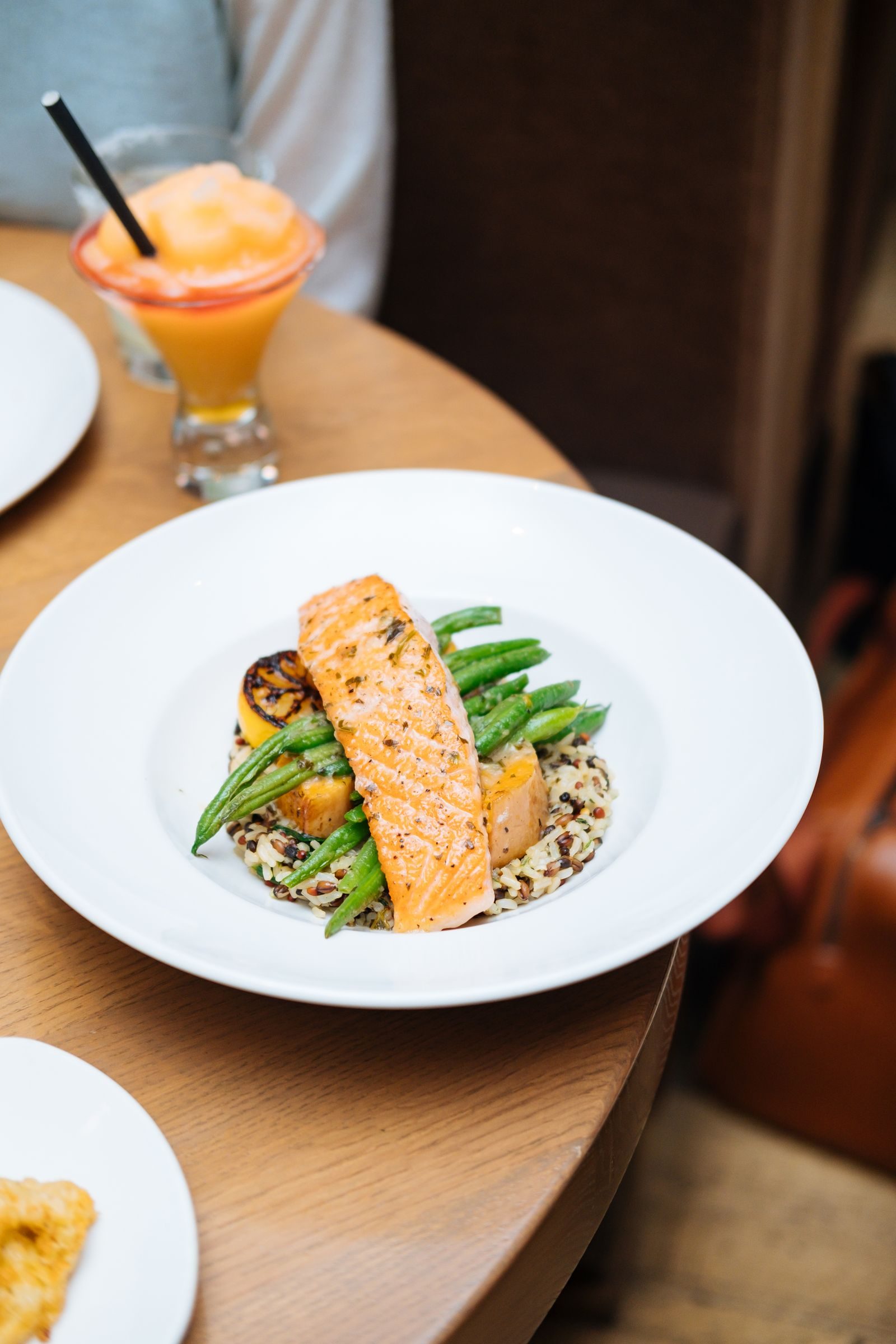
Oily fish such as salmon, sardines and mackerel are rich in long-chain omega-3 fats. A 2018 science advisory from the American Heart Association recommends one to two seafood meals a week to reduce the risk of congestive heart failure, coronary heart disease, ischaemic stroke and sudden cardiac death [4]. It adds: especially when seafood replaces less healthy foods [4].
Omega-3s are also part of a growing area of research on how inflammation ends. The body makes specialised pro-resolving mediators, signalling molecules that act as "stop signals" to switch off inflammation once it has done its job and to promote healing [5]. A 2024 review describes how a failure of this resolution process may contribute to atherosclerosis and discusses these mediators as possible future therapies [5]. This is still mainly a research field, not a reason to buy supplements, but it helps explain why scientists are so interested in dietary fats.
Do omega-6 fats cause inflammation?
You may have read that seed oils high in linoleic acid, the main omega-6 fat, cause inflammation. A 2017 meta-analysis pooled 30 randomised controlled trials with 1,377 participants [6]. Increasing linoleic acid intake had no significant effect on a long list of inflammatory markers, including C-reactive protein (CRP), TNF and IL-6 [6]. A subgroup analysis hinted that CRP might rise with very large increases in intake, so the authors called for more research [6].
Overall, the trial evidence does not support the idea that normal amounts of vegetable oils inflame the body. The WHO also lists them as healthy replacements for saturated and trans fat [1][2].
Practical takeaways
- Think "swap", not "cut". Replace butter, lard and fatty processed meats with olive or other vegetable oils, nuts and seeds [1].
- Keep saturated fat at or below about 10% of energy, roughly 22 g on a 2,000-calorie day [1].
- Avoid trans fat. Skip products listing partially hydrogenated oil [2].
- Cook with extra-virgin olive oil and enjoy a handful of nuts as part of a Mediterranean-style pattern [3].
- Have fish once or twice a week, ideally in place of processed or fried meat [4].
- Don't fear vegetable oils. Trials haven't shown that linoleic acid raises inflammation at usual intakes [6].
- Choose fibre-rich carbohydrates such as whole grains, beans and vegetables when you cut back on saturated fat [1].
Small swaps, steady progress
Changing the fats in your kitchen doesn't require a new diet, just one swap at a time. Viivaa helps you build these healthy habits one small step at a time, so progress feels steady and sustainable.
This article is for general information only and isn't medical advice. If you have heart disease, high cholesterol, diabetes or another medical condition, or take medication, please talk to your doctor or a registered dietitian before changing your diet.
References
- World Health Organization. Saturated fatty acid and trans-fatty acid intake for adults and children: WHO guideline. Geneva: WHO; 2023. https://www.who.int/publications/i/item/9789240073630
- World Health Organization. Trans fat. Fact sheet. https://www.who.int/news-room/fact-sheets/detail/trans-fat
- Estruch R, Ros E, Salas-Salvadó J, et al. Primary prevention of cardiovascular disease with a Mediterranean diet supplemented with extra-virgin olive oil or nuts. N Engl J Med. 2018;378(25):e34. https://doi.org/10.1056/NEJMoa1800389
- Rimm EB, Appel LJ, Chiuve SE, et al. Seafood long-chain n-3 polyunsaturated fatty acids and cardiovascular disease: a science advisory from the American Heart Association. Circulation. 2018;138(1):e35–e47. https://doi.org/10.1161/CIR.0000000000000574
- Fredman G, Serhan CN. Specialized pro-resolving mediators in vascular inflammation and atherosclerotic cardiovascular disease. Nat Rev Cardiol. 2024;21(11):808–823. https://doi.org/10.1038/s41569-023-00984-x
- Su H, Liu R, Chang M, Huang J, Wang X. Dietary linoleic acid intake and blood inflammatory markers: a systematic review and meta-analysis of randomized controlled trials. Food Funct. 2017;8(9):3091–3103. https://doi.org/10.1039/C7FO00433H