
After a short night, many people notice they're hungrier than usual and that sweet or salty snacks look especially good. That isn't a lack of willpower. Research shows that sleep loss changes the hormones that regulate appetite and the way the brain evaluates food.
Here is what the evidence shows about sleep and appetite, and what it means in practice.
Short sleep changes your appetite hormones
Two hormones play a central role in appetite. Leptin, released mainly by fat tissue, helps signal that the body has enough energy. Ghrelin, produced mainly in the stomach, signals hunger.
In a randomized crossover study published in 2004, 12 healthy young men spent two days with restricted sleep and two days with extended sleep, under controlled conditions of food intake and physical activity [1]. After sleep restriction, compared with extended sleep [1]:
- Leptin was 18% lower.
- Ghrelin was 28% higher.
- Hunger ratings rose by 24% and appetite by 23%.
- Appetite for calorie-dense, high-carbohydrate foods rose by 33% to 45%.
The authors noted the study's limits: only 12 young men took part, and energy expenditure was not measured [1]. Even so, it was among the first controlled studies to show that a few short nights can shift appetite signals in a direction that favours eating more.
Sleep loss changes how your brain responds to food
Hormones are only part of the picture. In a 2013 brain-imaging study, 23 healthy young adults rated how much they wanted various foods, once after a normal night of sleep in the lab and once after a night of total sleep deprivation [2].
After sleep deprivation, activity fell in frontal and insular brain regions involved in evaluating choices, while activity rose in the amygdala, a region involved in reward and emotion [2]. Participants also showed a greater desire for high-calorie foods, and the effect was larger in people who felt more severely sleep-deprived [2].
Notably, self-reported hunger did not differ between the two sessions, and participants were given extra calories during the sleep-deprivation session to offset the energy used by staying awake [2]. This suggests that sleep loss can change food preferences even when you aren't hungrier and your body isn't short of energy. The study measured desire rather than how much people actually ate, so it explains a mechanism rather than proving weight gain [2].
Your body clock and sleep timing
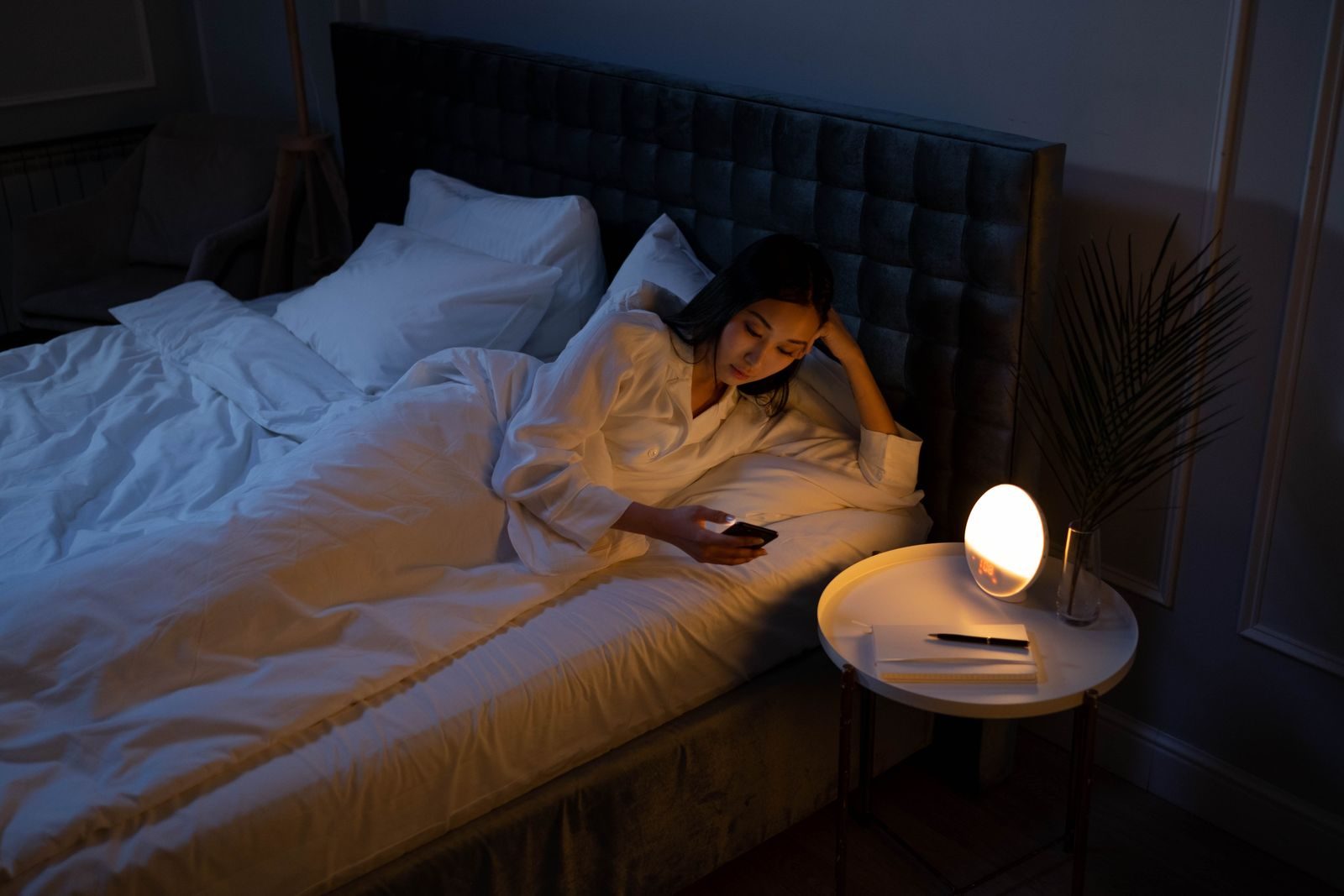
Sleep is not only about how many hours you get but also about when. A 2022 review in The Lancet describes how circadian rhythms, generated by molecular clocks in the brain and other tissues, interact with daily routines to promote sleep at night [3]. Work and social schedules, light exposure and biological factors can push sleep out of alignment, with consequences for physical and mental health [3]. The authors also noted that high-quality studies in this area are still scarce [3].
Light is the main signal that keeps the human clock synchronized with the 24-hour day. The internal clock runs close to, but not exactly, 24 hours, so it has to be reset a little every day through regular exposure to light and darkness [5]. In laboratory studies, people kept in dim light drifted to a later rhythm [5]. Laboratory research summarized by Duffy and Czeisler shows that the timing, intensity, duration and colour (wavelength) of light all affect the body clock [5]. Light in the late biological day or early night tends to shift the clock later, while light in the late biological night or early morning tends to shift it earlier [5].
Why a regular sleep schedule matters
In 2023, a panel convened by the US National Sleep Foundation reviewed 63 studies on sleep timing [4]. Its consensus was that consistent sleep and wake times are important for health, safety and performance [4]. The panel also agreed that if you don't get enough sleep during the week, catching up on non-work days may help [4].
How much sleep is recommended?
The National Sleep Foundation's expert panel recommends, for healthy people without a sleep disorder [6]:
| Age group | Recommended sleep |
|---|---|
| Teenagers | 8 to 10 hours |
| Young adults and adults | 7 to 9 hours |
| Older adults | 7 to 8 hours |
The panel noted that sleep needs vary from person to person, and that regularly sleeping far outside these ranges may be a sign of a health problem [6].
What this means for weight
The studies above show short-term changes in appetite hormones, hunger and food preference after sleep loss [1, 2]. They don't prove that poor sleep alone causes long-term weight gain, and they were done in small groups of mostly young, healthy adults. But they offer a plausible explanation for why tired days can feel like hungry days, and why sleep is worth treating as part of any weight-management plan.
If you snore loudly, wake unrefreshed despite enough time in bed, or have ongoing trouble falling or staying asleep, talk to a doctor. Sleep disorders, including disorders of sleep timing, can be assessed and treated [3].
Practical takeaways
- Protect a 7 to 9 hour sleep window if you're an adult [6].
- Keep your bed and wake times consistent, including weekends where possible [4].
- Get daylight in the morning and keep evening light dimmer to help your body clock [5].
- Plan ahead for short nights. Expect stronger cravings after poor sleep [1, 2] and keep easy, filling options such as protein and vegetables within reach.
- Notice the pattern. Tracking sleep alongside hunger can show how strongly sleep affects your own appetite.
- Talk to a doctor about persistent sleep problems.
Building habits that last
Better sleep starts with small, consistent routines. Viivaa helps you build these healthy habits one small step at a time, so progress feels steady and sustainable.
This article is for general information only and isn't medical advice. If you have ongoing sleep problems, a sleep disorder, or concerns about your weight, please talk to your doctor or another qualified health professional.
References
- Spiegel K, Tasali E, Penev P, Van Cauter E. Brief communication: sleep curtailment in healthy young men is associated with decreased leptin levels, elevated ghrelin levels, and increased hunger and appetite. Ann Intern Med. 2004;141(11):846–850. https://doi.org/10.7326/0003-4819-141-11-200412070-00008
- Greer SM, Goldstein AN, Walker MP. The impact of sleep deprivation on food desire in the human brain. Nat Commun. 2013;4:2259. https://doi.org/10.1038/ncomms3259
- Meyer N, Harvey AG, Lockley SW, Dijk DJ. Circadian rhythms and disorders of the timing of sleep. Lancet. 2022;400(10357):1061–1078. https://doi.org/10.1016/S0140-6736(22)00877-7
- Sletten TL, Weaver MD, Foster RG, et al. The importance of sleep regularity: a consensus statement of the National Sleep Foundation sleep timing and variability panel. Sleep Health. 2023;9(6):801–820. https://doi.org/10.1016/j.sleh.2023.07.016
- Duffy JF, Czeisler CA. Effect of light on human circadian physiology. Sleep Med Clin. 2009;4(2):165–177. https://doi.org/10.1016/j.jsmc.2009.01.004
- Hirshkowitz M, Whiton K, Albert SM, et al. National Sleep Foundation's sleep time duration recommendations: methodology and results summary. Sleep Health. 2015;1(1):40–43. https://doi.org/10.1016/j.sleh.2014.12.010