
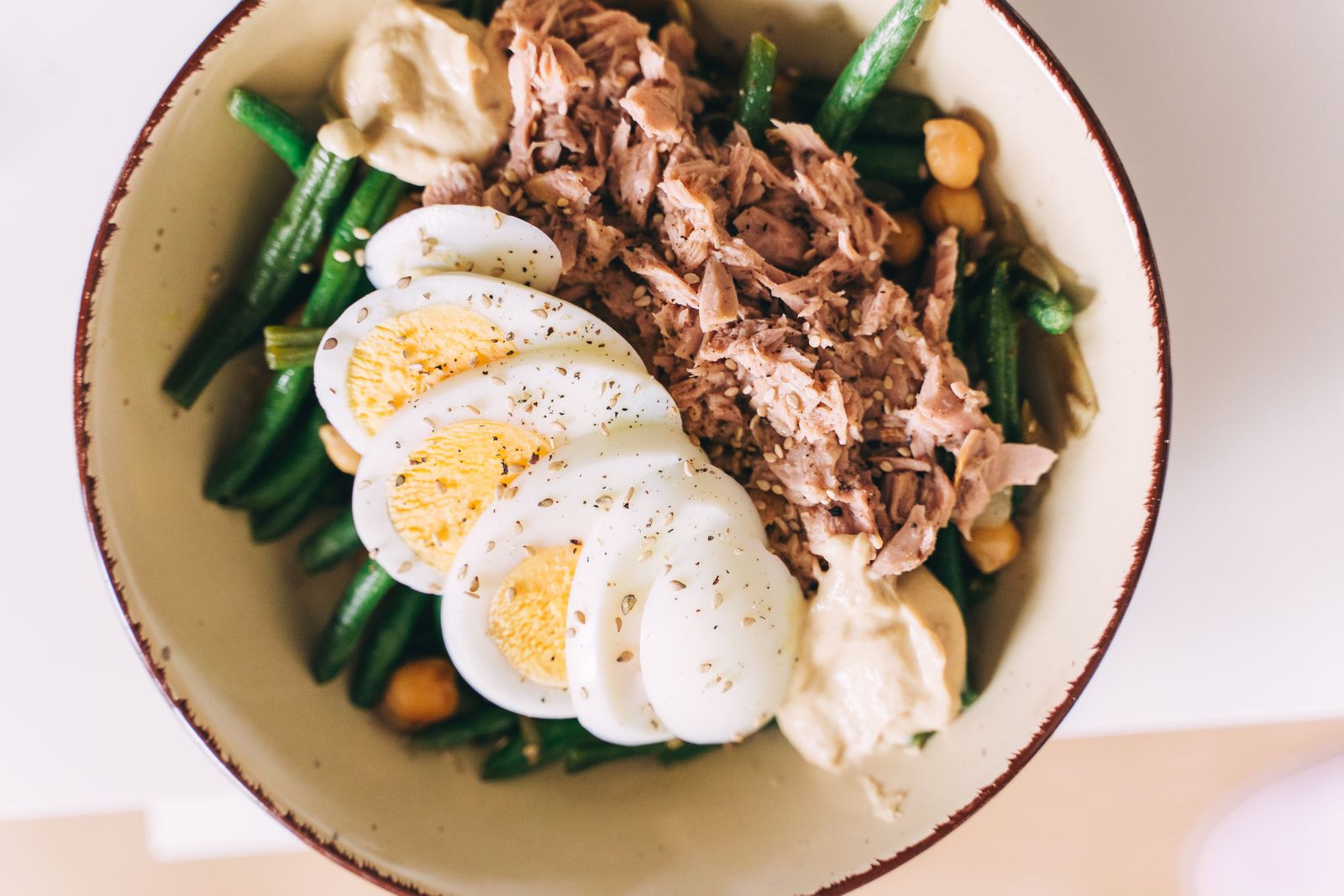
Protein is often discussed as a single number: how many grams you eat in a day. But proteins differ. They contain different mixes of amino acids, and our bodies digest and absorb them to different degrees.
That raises two common questions. Is animal protein "better" than plant protein? And can people who eat little or no meat get enough high-quality protein? Here's what the research says.
How protein quality is measured
Our bodies need nine indispensable (essential) amino acids that we can't make ourselves and must get from food. Protein quality describes how well a food supplies those amino acids in a form the body can actually use.
The Food and Agriculture Organization of the United Nations (FAO) has endorsed a method called the Digestible Indispensable Amino Acid Score (DIAAS) to replace the older PDCAAS score [2]. DIAAS compares the amino acids a protein provides, adjusted for how much is digested and absorbed by the end of the small intestine, with a reference pattern of human needs [1, 2].
A DIAAS of 100 or more is considered "excellent" quality, 75 to 99 is "high" quality, and below 75 carries no quality claim [1].
Plant vs. animal protein scores
A 2020 analysis calculated DIAAS values for five animal and 12 plant proteins [1]. Using the reference pattern for young children (0.5 to 3 years), it found:
- Excellent quality (above 100): pork meat, casein (a milk protein), egg and potato protein.
- High quality (75 or more): whey and soy protein.
- No quality claim (below 75): gelatin, rapeseed, lupin, canola, corn, hemp, fava bean, oat, pea and rice proteins [1].
So, on average, many single plant proteins score lower than animal proteins, mainly because they're lower in one or more essential amino acids or are less digestible. But the same analysis also found considerable variation within and between protein sources [1].
Importantly, mixing proteins changes the picture. Potato, soy and pea proteins complemented a broad range of other plant proteins, giving higher DIAAS values when combined in specific ratios [1]. In everyday terms, eating a variety of plant proteins across the day, such as beans with grains, or tofu with vegetables and seeds, helps fill amino acid gaps. (Note that the authors of this analysis work for a company that produces potato protein [1].)
The limits of protein scores
DIAAS is useful, but it isn't perfect. A 2021 review outlined several limitations, many of which matter most for plant-based diets [2]:
- It doesn't account for differences in the factors used to convert nitrogen into protein between plant and animal foods.
- Many commonly eaten plant foods aren't well represented in the data.
- It doesn't fully reflect how cooking, heat treatment and processing increase the digestibility of many plant foods.
- Its digestibility values rely heavily on fast-growing animal models rather than humans.
- It scores isolated foods, while people eat whole meals in which proteins complement each other [2].
The authors also cautioned against using DIAAS out of context, such as in exercise settings, where it could produce misleading conclusions [2]. A score for one food tells you little about the quality of a whole diet.
Where does red meat fit?
Animal foods do offer some clear nutritional advantages. A review of red meat in the diet noted that, as part of a healthy, varied diet, red meat provides high-biological-value protein and essential nutrients, some of which are more bioavailable than in alternative sources [3].
The same review discussed red meat's role in satiety and weight control, concluding that including lean red meat in a healthy, varied diet may help weight loss as part of an energy-reduced diet [3]. It also summarised UK advice on how much red meat can be eaten as part of a healthy, varied diet. In other words, lean red meat can fit, in sensible portions, but it isn't required.
Can vegetarians get enough protein?
Yes, with planning. The Academy of Nutrition and Dietetics states that appropriately planned vegetarian and vegan diets are healthful and nutritionally adequate, and suitable for all stages of life, including pregnancy, childhood, older age and for athletes [4].
Plant-based diets are often rich in vegetables, fruit, whole grains, legumes, soy foods, nuts and seeds, which bring fibre and other beneficial compounds [4]. The position paper also notes one non-negotiable: vegans need a reliable source of vitamin B12, such as fortified foods or supplements [4].
Vegetarians and creatine
Creatine is a compound that helps supply energy for short, intense efforts. It's found naturally in meat and fish, so vegetarians tend to have lower creatine stores in their muscles [5].
A systematic review of nine studies found that creatine supplementation in vegetarians raised creatine levels in muscle, often above those of meat-eaters, and increased lean tissue mass and muscle strength [5]. The authors concluded that vegetarian athletes are likely to benefit, but the studies had a moderate to high risk of bias [5]. Anyone considering a supplement should check with a health professional first.
Practical takeaways
- Protein quality depends on amino acid content and digestibility; DIAAS is the FAO-endorsed score [1, 2].
- Many individual plant proteins score lower than animal proteins, but combining them raises overall quality [1].
- DIAAS has real limitations, especially for plant-based diets and mixed meals [2].
- Lean red meat can be part of a balanced diet and provides well-absorbed nutrients, but it isn't essential [3].
- Well-planned vegetarian and vegan diets are adequate at every life stage; vegans need a reliable B12 source [4].
- Vegetarians have lower creatine stores, and supplements may help athletes [5].
Make protein a habit
Whether your protein comes from plants, animals or both, consistency and variety matter most. Viivaa helps you build healthy habits one small step at a time, so progress feels steady and sustainable.
This article is for general information only and isn't medical advice. If you're changing to a vegetarian or vegan diet, are pregnant, have kidney disease or are considering supplements, please talk to your doctor or a registered dietitian.
References
- Herreman L, Nommensen P, Pennings B, Laus MC. Comprehensive overview of the quality of plant- and animal-sourced proteins based on the digestible indispensable amino acid score. Food Sci Nutr. 2020;8(10):5379–5391. https://doi.org/10.1002/fsn3.1809
- Craddock JC, Genoni A, Strutt EF, Goldman DM. Limitations with the Digestible Indispensable Amino Acid Score (DIAAS) with special attention to plant-based diets: a review. Curr Nutr Rep. 2021;10(1):93–98. https://doi.org/10.1007/s13668-020-00348-8
- Wyness L. The role of red meat in the diet: nutrition and health benefits. Proc Nutr Soc. 2016;75(3):227–232. https://doi.org/10.1017/S0029665115004267
- Melina V, Craig W, Levin S. Position of the Academy of Nutrition and Dietetics: vegetarian diets. J Acad Nutr Diet. 2016;116(12):1970–1980. https://doi.org/10.1016/j.jand.2016.09.025
- Kaviani M, Shaw K, Chilibeck PD. Benefits of creatine supplementation for vegetarians compared to omnivorous athletes: a systematic review. Int J Environ Res Public Health. 2020;17(9):3041. https://doi.org/10.3390/ijerph17093041