
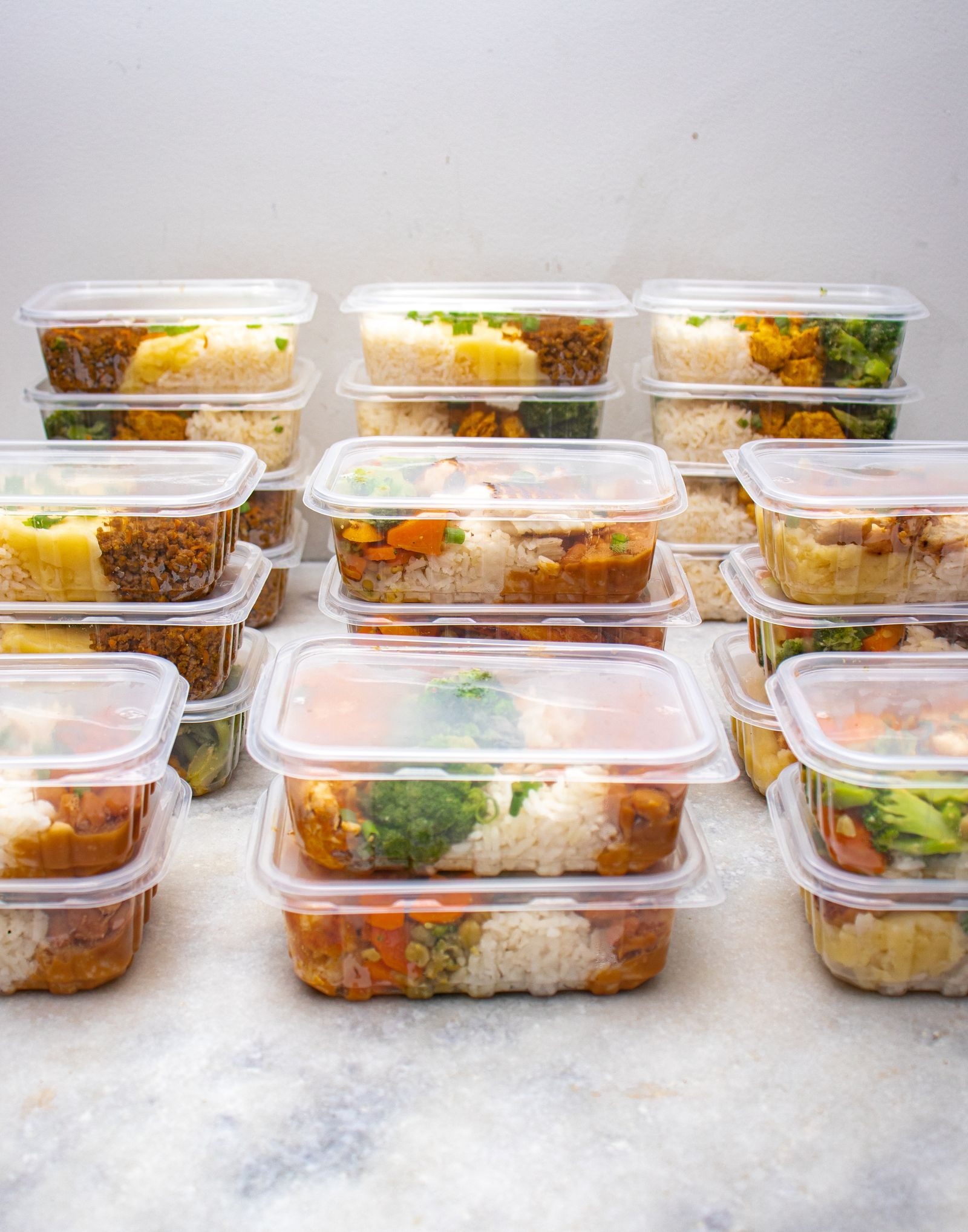
It's 6:30 pm, everyone is hungry, and nobody knows what's for dinner. That's often when takeaway, a frozen pizza or a pile of snacks wins, not because anyone chose it, but because nothing else was ready.
Meal planning is a simple fix for that moment. But does it actually make a difference to what you eat and to your weight? Here is what the research shows, and a weekly routine you can start this weekend.
What counts as meal planning?
In research, meal planning usually means deciding in advance which foods you'll eat over the next few days [1]. It doesn't have to mean cooking everything on Sunday or eating the same lunch all week. It just means fewer "what's for dinner?" decisions made on an empty stomach.
The idea is that planning ahead helps with lack of time, which in turn makes it easier to cook at home, and home cooking has been linked to better diet quality [1].
What the research shows
Meal planners ate a more varied, healthier diet
A 2017 study in the International Journal of Behavioral Nutrition and Physical Activity looked at 40,554 adults in France taking part in the NutriNet-Santé study [1]. Participants were asked whether they planned meals, and their diets were assessed using repeated 24-hour food records and a food frequency questionnaire [1].
- 57% said they planned meals at least occasionally [1].
- Meal planners were more likely to have higher adherence to national nutrition guidelines [1].
- They were also more likely to have greater food variety overall [1].
Meal planning was linked to lower odds of obesity
The same study found [1]:
- In women, meal planning was linked to lower odds of overweight (about 8% lower) and of obesity (about 21% lower).
- In men, meal planning was linked to lower odds of obesity (about 19% lower), but not of overweight.
The authors concluded that meal planning was associated with a healthier diet and less obesity, and could potentially be relevant for obesity prevention [1].
Cooking at home was linked to fewer calories
A 2015 study in Public Health Nutrition used US national survey data from 9,569 adults to compare households by how often someone cooked dinner [2].
- About 8% of adults lived in households where dinner was cooked 0–1 times a week [2].
- Compared with them, people in households cooking dinner 6–7 times a week consumed less energy per day (9,054 vs 9,627 kJ, a difference of roughly 140 kcal), less fat (81 vs 86 g) and less sugar (119 vs 135 g) [2].
- People trying to lose weight consumed less energy than those who weren't, whatever their household's cooking frequency [2].
The authors concluded that cooking dinner often at home is linked to a healthier diet, whether or not someone is trying to lose weight [2].
An honest answer: what we can and can't say
Both of these studies are cross-sectional: they looked at people at one point in time. They can't prove that meal planning or home cooking causes weight loss. The authors of the 2017 study state clearly that no causality can be inferred [1]. It's possible, for example, that people who plan meals also differ in other healthy habits.
What the evidence does consistently show is that planning ahead and cooking at home go together with better diet quality and lower odds of obesity. For many people, that's reason enough to try it, especially because the downside is small.
It's also worth noting what the research didn't require. In the French study, meal planning simply meant deciding ahead which foods would be eaten over the next few days, and most planners did it at least once a week [1]. You don't need a perfect, colour-coded system. Deciding a few days of meals ahead is a reasonable place to start.
Why planning may help: the decision is already made
Planning ahead works a lot like an if-then plan: you make the decision in advance, when you're calm and not hungry. Research on if-then plans for healthy eating found that specific, simple plans worked better than complex ones [3]. That's a useful principle for meal planning too: a short, realistic plan beats an ambitious one you won't follow.

Practical takeaways: a simple weekly routine
Step 1: Pick a planning moment (10–15 minutes). Choose a regular time, such as Sunday afternoon. Turn it into a plan: "If it's Sunday after lunch, then I'll plan the week's dinners" [3].
Step 2: Check your week. Note busy evenings, social plans and nights you'll be home late. Plan the quickest meals for the busiest days.
Step 3: Plan dinners first. Start with three or four dinners, not seven. Leave room for leftovers and flexibility. Cooking dinner at home most nights was linked to fewer calories, less fat and less sugar [2].
Step 4: Aim for variety. Rotate vegetables, proteins and grains across the week. Food variety was one of the clearest differences in meal planners [1].
Step 5: Write the shopping list from the plan. Shopping from a list helps ensure the ingredients for your planned meals are actually at home when you need them.
Step 6: Prep one or two things ahead. Wash and chop vegetables, cook a batch of grains or beans, or portion leftovers into containers for lunch.
Step 7: Have a back-up meal. Keep a simple fallback on hand, such as eggs and vegetables or a soup, for nights when the plan falls apart.
Step 8: Review at the end of the week. What worked? What went uneaten? Adjust next week's plan rather than starting from scratch.
Building habits that last
Meal planning gets faster the more you do it, and even a partial plan helps. Viivaa helps you build these healthy habits one small step at a time, so progress feels steady and sustainable.
This article is for general information only and isn't medical advice. If you have a medical condition, food allergies or specific dietary needs, please talk to your doctor or a registered dietitian before changing your diet.
References
- Ducrot P, Méjean C, Aroumougame V, et al. Meal planning is associated with food variety, diet quality and body weight status in a large sample of French adults. Int J Behav Nutr Phys Act. 2017;14(1):12. https://doi.org/10.1186/s12966-017-0461-7
- Wolfson JA, Bleich SN. Is cooking at home associated with better diet quality or weight-loss intention? Public Health Nutr. 2015;18(8):1397–1406. https://doi.org/10.1017/S1368980014001943
- Carrero I, Vilà I, Redondo R. What makes implementation intention interventions effective for promoting healthy eating behaviours? A meta-regression. Appetite. 2019;140:239–247. https://doi.org/10.1016/j.appet.2019.05.024