
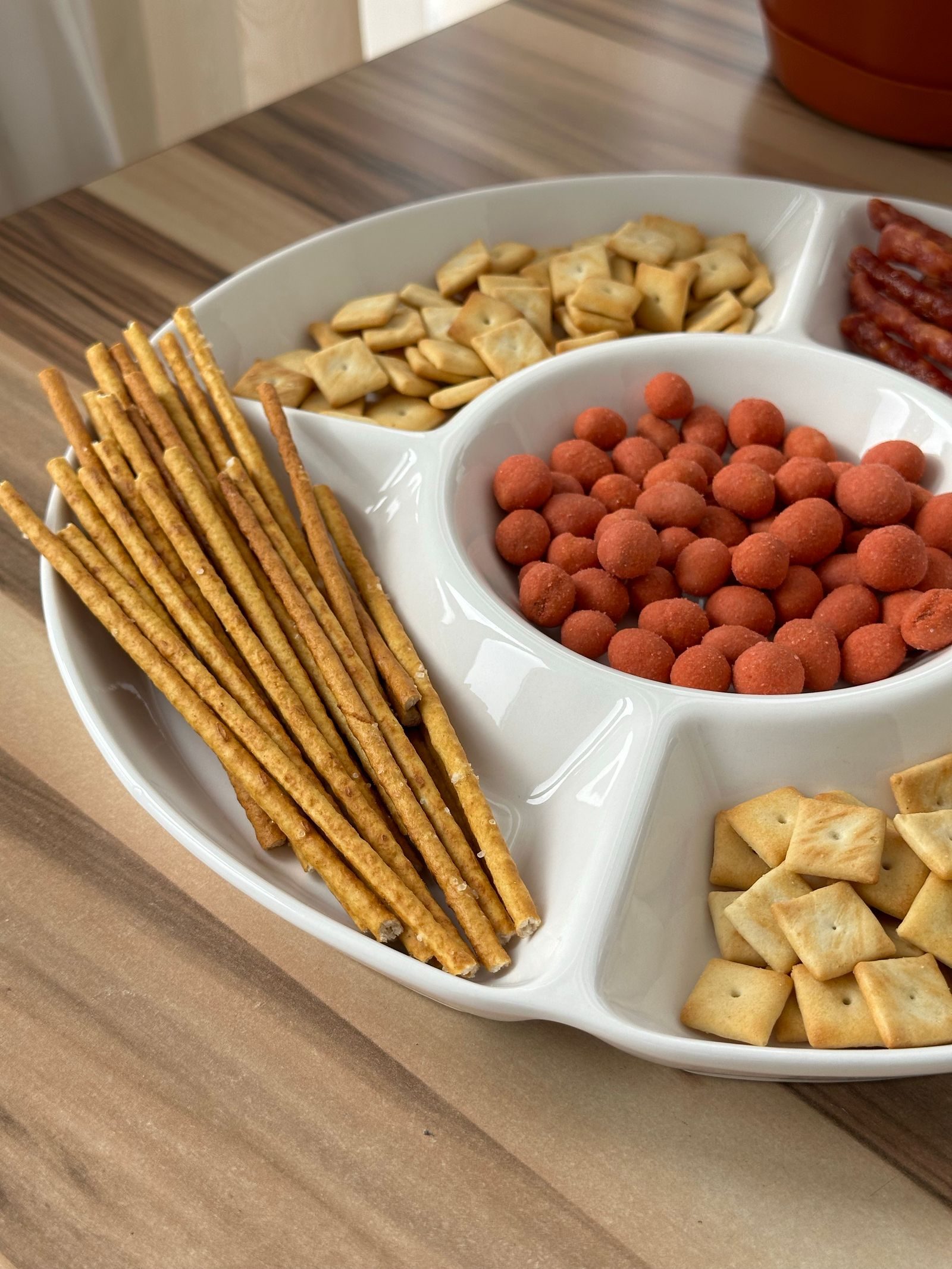
You open a bag of crisps planning to have a handful, and a few minutes later the bag is empty. Many people describe this experience and quietly blame themselves for it.
Researchers have a different question: is something about certain foods making them especially hard to stop eating? Here is what the evidence says, and why the answer matters more than any judgement about willpower.
What counts as "ultra-processed"?
Scientists often group foods using the NOVA classification, which sorts foods by the nature, extent and purpose of their processing rather than by nutrients alone [1]. It has four groups: unprocessed or minimally processed foods, processed culinary ingredients, processed foods, and ultra-processed foods [1]. The NIH researchers who used it also pointed out why ultra-processed foods are hard to replace: they are inexpensive, last a long time, are relatively safe microbiologically, provide important nutrients, and are highly convenient, often ready to eat or ready to heat [1]. The system has been criticised as imprecise, but it is used in Brazil's national dietary guidelines, which advise avoiding ultra-processed foods [1].
A 2021 review described ultra-processed foods as mostly made from cheap industrial sources of energy and nutrients plus additives, and noted that their rise in the food supply has coincided with rising rates of obesity and diet-related disease [2].
The trial that tested ultra-processed diets directly
Most nutrition research is observational, so it can show links but not cause and effect. In 2019, researchers at the US National Institutes of Health ran a randomized controlled trial to test ultra-processed food directly [1].
Twenty weight-stable adults lived at the NIH Clinical Center for four weeks. For two weeks they ate an ultra-processed diet, and for two weeks an unprocessed diet, in random order [1]. The meals offered on each diet were matched for calories, energy density, fat, carbohydrate, protein, sugar, sodium and fibre. Participants could eat as much or as little as they wanted [1].
The results [1]:
- On the ultra-processed diet, people ate about 508 more calories per day.
- The extra calories came from carbohydrate and fat, not protein.
- People gained about 0.9 kg (2 lb) on the ultra-processed diet and lost about 0.9 kg (2 lb) on the unprocessed diet.
- Participants rated the two diets as similarly pleasant and familiar, so the extra eating wasn't simply because the food tasted better.
- People ate faster on the ultra-processed diet, and differences in eating rate were linked with differences in intake.
- The hunger hormone ghrelin decreased during the unprocessed diet compared with baseline.
The study was small and short, and it took place in a clinical setting. But it is strong evidence that the type of food on the plate can change how much people eat, even when the nutrients offered are matched.
So is food actually addictive?
A 2021 review in the Annual Review of Nutrition looked at the science of "food addiction" [2]. The authors described it as a pattern of eating that researchers most often frame as a substance-based addiction to ultra-processed foods [2].
The review examined [2]:
- How methods used to study substance-use disorders might apply to food.
- Evidence that some ingredients in ultra-processed foods have reinforcing potential that may drive compulsive eating.
- Whether food addiction is better understood as a substance addiction or a behavioural addiction.
Its overall conclusion was that the research suggests biological and behavioural parallels between food addiction and substance addictions. The foods most implicated were ultra-processed foods high in both added fat and refined carbohydrates [2]. The authors also stressed that longitudinal studies are needed, and raised concern about possible effects on children [2].
In short, food addiction is an active research area rather than a settled diagnosis. Some foods appear to be engineered in ways that make them harder to stop eating, and that is a property of the food, not a character flaw.
A lesson from smoking research
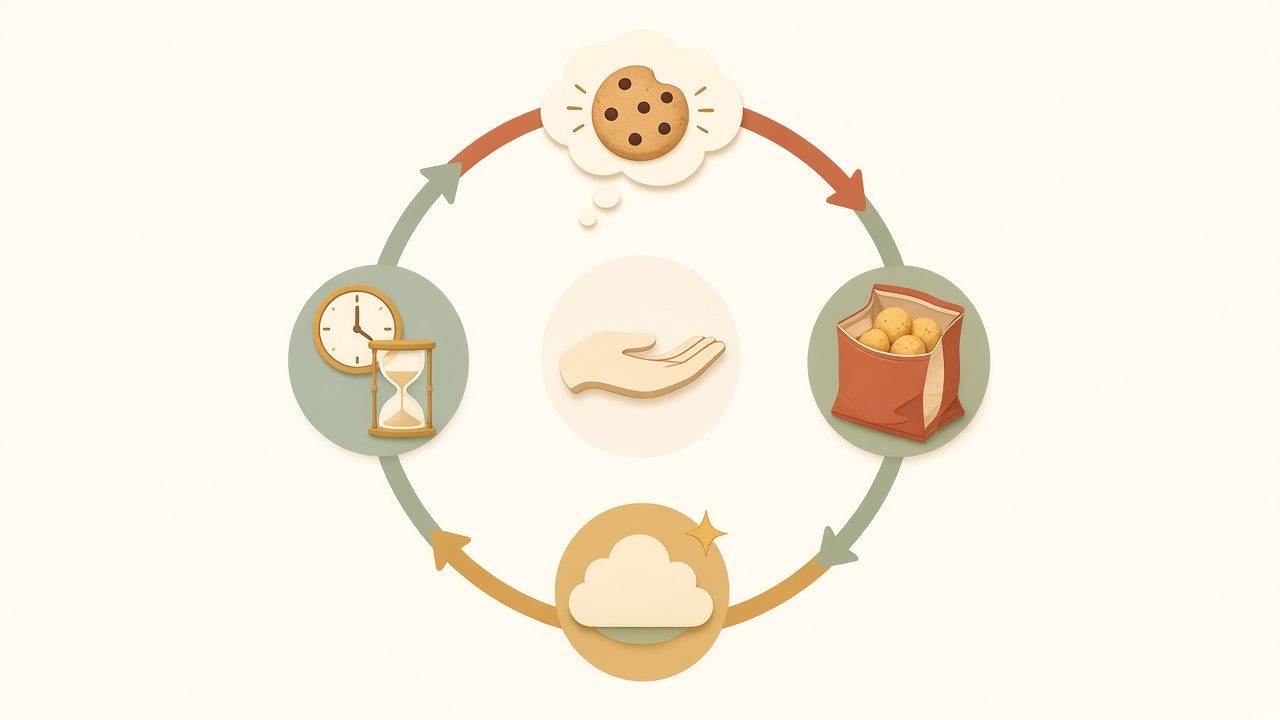
Research on nicotine offers a useful comparison, with an important caveat. In a 1999 paper, psychologist Andy Parrott examined why smokers often say cigarettes relieve stress [3]. He reported that adult smokers' stress levels are slightly higher than non-smokers', that stress tends to rise as adolescents become regular smokers, and that quitting leads to reduced stress [3]. His explanation was that the apparent calm from a cigarette mostly reflects relief from the tension and irritability that build up between cigarettes [3].
This was a review of research on nicotine, not food. Whether a similar cycle applies to ultra-processed foods hasn't been tested in the same way. Still, it is a useful question to ask yourself: is a particular snack genuinely helping you feel better, or mainly relieving a craving that the snack itself helps keep going?
Practical takeaways
- Build meals around minimally processed foods. In the NIH trial, the unprocessed diet led to lower intake and weight loss without anyone being told to eat less [1].
- Slow down. Faster eating on the ultra-processed diet went along with higher intake [1].
- Watch the fat-plus-refined-carb combination. These foods were most linked to addictive-like eating [2].
- Change your environment, not just your willpower. Keeping hard-to-stop foods out of easy reach removes the decision.
- Ask what the craving is relieving. Notice whether a snack actually helps or just quiets the urge for a while [3].
- Get support if eating feels out of control. Frequent episodes of eating large amounts with a sense of loss of control deserve a conversation with a doctor or mental health professional.
Building habits that last
Shifting the balance of what's on your plate works best as a series of small, steady changes. Viivaa helps you build these healthy habits one small step at a time, so progress feels steady and sustainable.
This article is for general information only and isn't medical advice. If you feel your eating is out of control, have a history of an eating disorder, or have concerns about your weight or health, please talk to your doctor or another qualified health professional.
References
- Hall KD, Ayuketah A, Brychta R, et al. Ultra-processed diets cause excess calorie intake and weight gain: an inpatient randomized controlled trial of ad libitum food intake. Cell Metab. 2019;30(1):67–77.e3. https://doi.org/10.1016/j.cmet.2019.05.008
- Gearhardt AN, Schulte EM. Is food addictive? A review of the science. Annu Rev Nutr. 2021;41:387–410. https://doi.org/10.1146/annurev-nutr-110420-111710
- Parrott AC. Does cigarette smoking cause stress? Am Psychol. 1999;54(10):817–820. https://doi.org/10.1037/0003-066X.54.10.817