
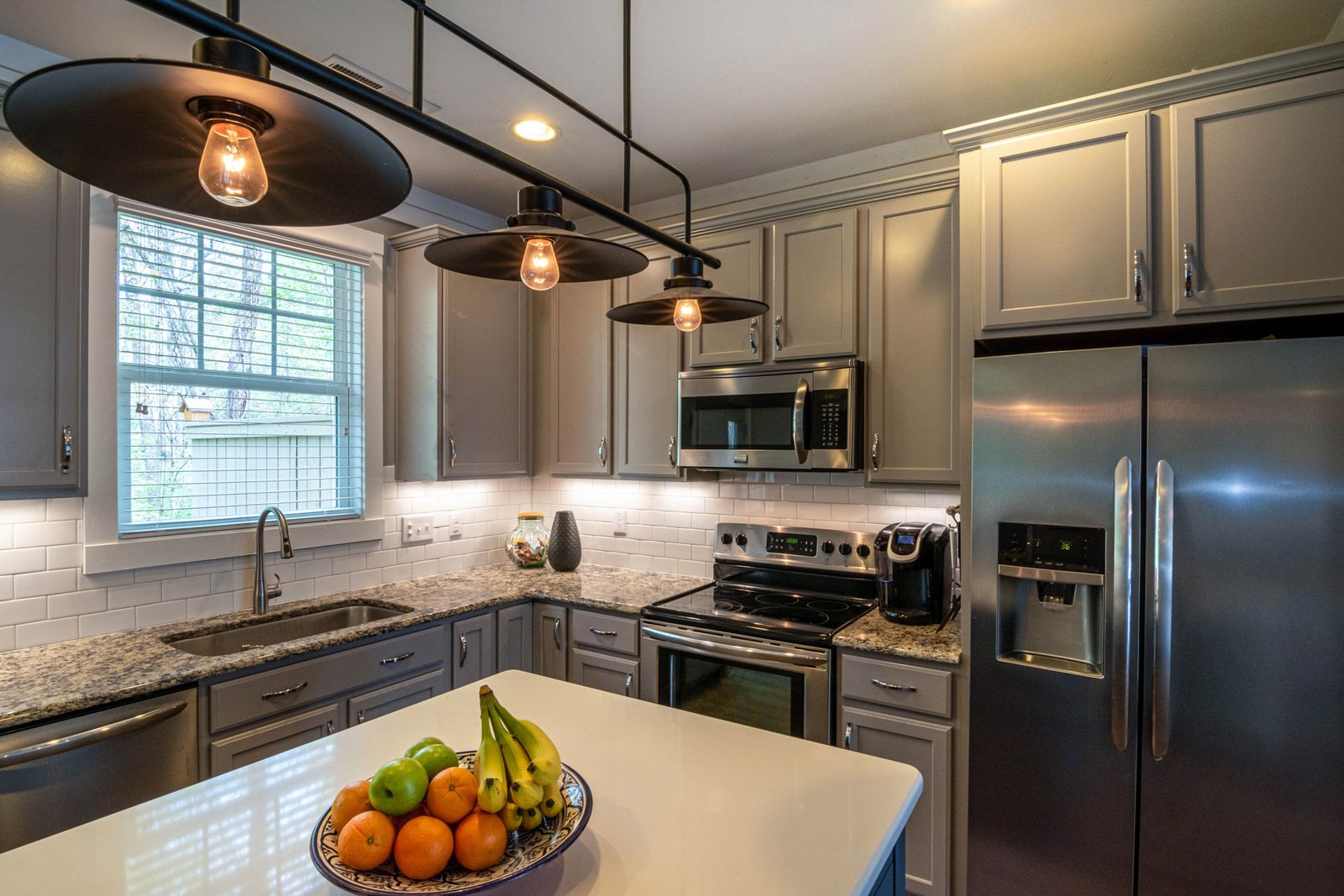
We like to think our food choices come down to hunger, preference and willpower. In reality, many decisions are shaped before we even feel hungry: by what is in the cupboard, what sits on the counter, and how we feel when we walk through the door.
Your home is where most of these small decisions happen. Research on home environments and on food placement suggests two things worth knowing: how your home feels may relate to stress and mood, and where food is placed can change how much of it you eat.
How your home feels: stress, mood and cortisol
In a study of 60 spouses from dual-income married couples, researchers asked each person to give a self-guided tour of their home and describe it in their own words [1]. They then analysed the language people used. Some descriptions focused on clutter and unfinished projects; others on the home as restful and restorative, with words about nature and relaxation.
Over the following three weekdays, participants also collected saliva samples so researchers could measure cortisol, a hormone involved in the stress response. Cortisol is normally high in the morning and falls steadily across the day.
Among the wives, those who described their homes as more stressful had flatter cortisol patterns across the day, a profile associated with poorer health outcomes, and their depressed mood increased over the day [1]. Those who described their homes as more restorative showed steeper cortisol declines, and their depressed mood eased over the day [1]. These results held after accounting for marital satisfaction and neuroticism, and they were reported for the wives in the study, so we cannot assume they apply equally to everyone.
This study did not measure eating, and it shows associations rather than cause and effect. But since stress and low mood can influence eating for many people, a home that feels calmer is a reasonable place to start.
Out of sight, out of reach: what food placement does
The stronger evidence concerns where food sits in your home. A Cochrane review, one of the most rigorous types of evidence summary, looked at studies that changed either the range of food available or how close it was to people [2].
The main findings:
- Proximity: across 12 studies with over 1,000 participants, placing food farther away reduced how much people ate. The farther away it was, the larger the effect [2].
- Availability: offering fewer options reduced how much of a food people selected, though only three small studies tested this [2].
There are important caveats. Most studies took place in laboratories in high-income countries, many had risk-of-bias concerns, and the reviewers rated the certainty of the evidence as low or very low [2]. The direction of the effect is consistent, but the exact size in real homes is uncertain. Still, rearranging a cupboard is low-cost and low-risk, which makes it a sensible experiment to try.
Does moving healthy food closer help too?
A natural next question is whether placing healthy food within easy reach makes people eat more of it. A lab experiment tested this with 248 adults who were given a distracting task [3]. A bowl of raisins or of chocolate sweets was placed either near them (20 cm, about 8 inches) or farther away (70 cm, about 28 inches).
- When the sweets were near, 68% of people ate some, compared with 56% when they were farther away [3].
- For raisins, distance made little difference: 63% ate some when they were near and 57% when they were farther away [3].
In this study, moving the less healthy snack away reduced intake, but moving the healthier snack closer did not clearly increase it [3]. The practical lesson: putting distance between you and less healthy foods may matter more than keeping healthy foods close, although both are reasonable steps.
Practical ways to make your home work for you
These ideas apply the research above. None needs a big renovation.
- Move tempting foods out of reach. Store biscuits, crisps and sweets in a high cupboard, an opaque container or another room. Distance seems to matter most for less healthy snacks [2, 3].
- Keep fewer treats in the house. Fewer options at home means fewer decisions in the moment [2].
- Still make healthy food easy. A fruit bowl or washed vegetables at eye level in the fridge costs nothing, even if the evidence for this step is weaker [3].
- Clear one surface. If clutter feels stressful, start small: the kitchen counter or dining table. A calmer space may help mood [1].
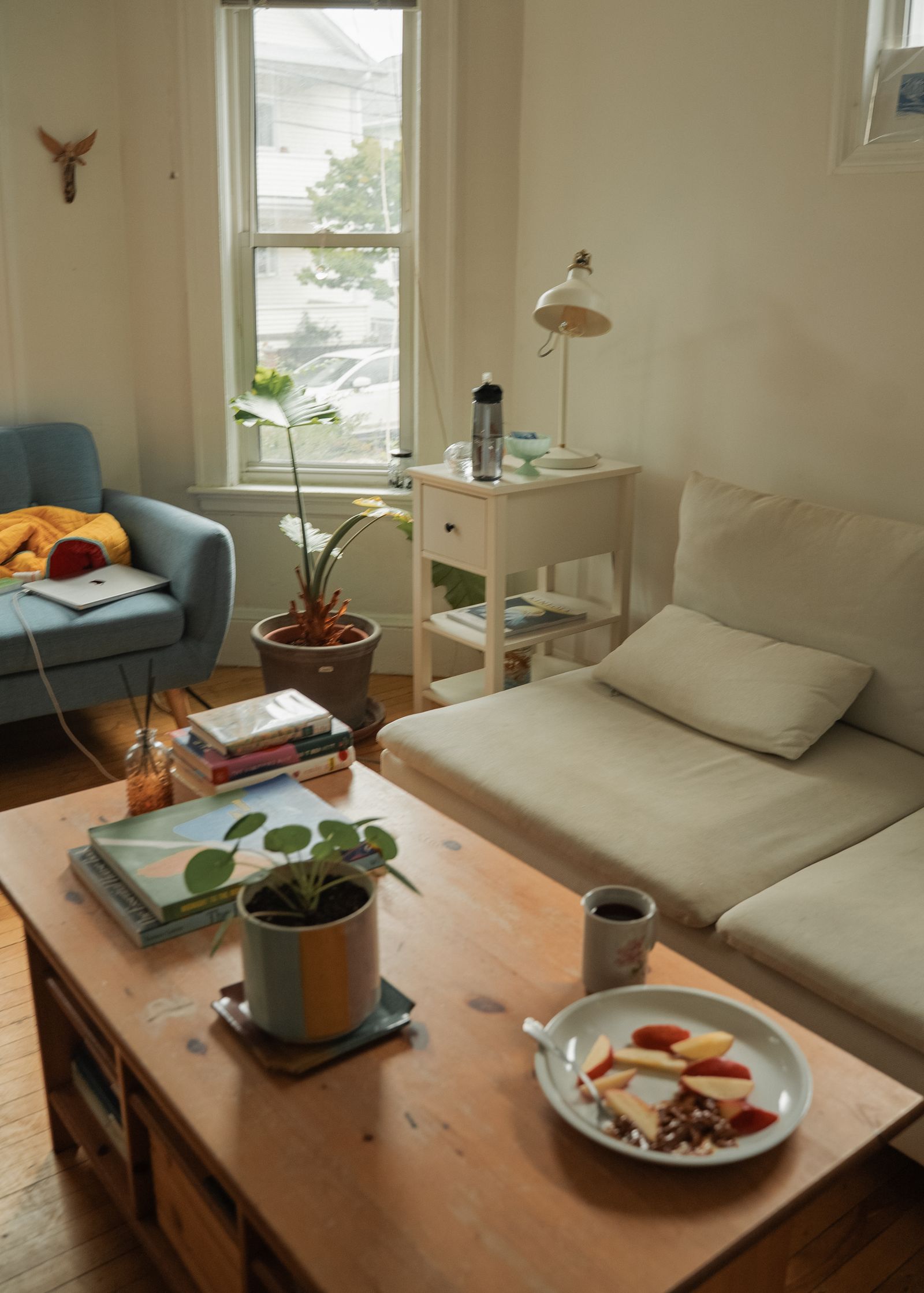
- Create a restful corner. Plants, natural light or a comfortable chair away from the kitchen can give you somewhere to unwind that isn't the fridge [1].
- Eat in one place. Keeping meals to the table, rather than the sofa or desk, limits how many places in your home become cues to eat.
Practical takeaways
- In one study, wives who described their homes as cluttered and stressful had flatter cortisol patterns and worsening mood across the day [1].
- Placing food farther away tends to reduce how much people eat, though the evidence is low certainty [2].
- Distance seems to matter more for less healthy snacks than for healthier ones [3].
- Small changes to storage and layout can make healthier choices the easier ones.
Make the easy choice the healthy one
Small changes at home add up when you repeat them. Viivaa helps you build healthy habits one small step at a time, so progress feels steady and sustainable.
This article is for general information only and is not medical advice. If you are struggling with stress, low mood or your relationship with food, please speak with a doctor or another qualified health professional.
References
- Saxbe DE, Repetti R. No place like home: home tours correlate with daily patterns of mood and cortisol. Pers Soc Psychol Bull. 2010;36(1):71–81. https://doi.org/10.1177/0146167209352864
- Hollands GJ, Carter P, Anwer S, et al. Altering the availability or proximity of food, alcohol, and tobacco products to change their selection and consumption. Cochrane Database Syst Rev. 2019;8(8):CD012573. https://doi.org/10.1002/14651858.CD012573.pub2
- Hunter JA, Hollands GJ, Pilling M, Marteau TM. Impact of proximity of healthier versus less healthy foods on intake: a lab-based experiment. Appetite. 2019;133:147–155. https://doi.org/10.1016/j.appet.2018.10.021