

You eat well for two weeks, then a stressful evening turns into a takeaway and a "what's the point" weekend. You walk every day for a month, miss three days, and stop altogether. If this pattern sounds familiar, it is tempting to call it self-sabotage and conclude that you lack willpower.
There is another way to look at it. Many of the habits we keep, and the ones we drop, line up with how we see ourselves. Research on identity and health behaviour suggests that change tends to hold better when it fits the person you believe you are.
What we mean by "self-sabotage"
In everyday language, self-sabotage means acting against goals you genuinely care about. In health, it often looks like:
- Dropping a new routine after a single slip.
- Thinking "I'm just not a sporty person" or "I've always been bad with food".
- Treating progress as temporary, something you are doing until you can stop.
Researchers rarely study "self-sabotage" by that name. They do study something closely related: how our sense of identity connects to the habits we form and keep.
Habits and identity go together
A 2025 meta-analysis pulled together 19 studies with more than 13,000 participants, looking at health behaviours such as physical activity, healthy eating and drinking [1]. It found a strong relationship between habit and identity (r = 0.55). People who saw a behaviour as part of who they are, such as "I am someone who exercises", tended to have stronger habits for that behaviour.
Two details matter. First, the link was stronger when identity was measured directly, by asking people how they see themselves [1]. Second, the authors note that the relationship may not run in only one direction. Identity may support habits, and repeating a habit may, in turn, shape identity [1].
That second point is good news. You do not have to wait to "become" a healthy person before you act. Small, repeated actions can be part of how a new identity forms.
Can identity be changed on purpose?
A 2026 systematic review looked at 20 studies of interventions designed to change identity in relation to physical activity or smoking [2]. These included:
- Possible-self exercises, in which people imagine and describe the person they hope to become.
- Multi-component programmes that combined identity work with other behaviour-change tools.
- Games using avatars that represented a possible future self.
- Identity-challenge approaches that question an existing, unhelpful self-image.
Nearly half of the studies showed significant positive effects on identity, behaviour or both, and none reported negative effects [2]. The review also pointed to factors that may explain how these interventions work: self-efficacy (confidence that you can do it), planning, and thinking about the future consequences of what you do now [2].
These studies focused on activity and smoking rather than eating, and results were mixed. Still, they suggest that how you see yourself is something you can work on, not a fixed trait.
The groups we belong to matter too
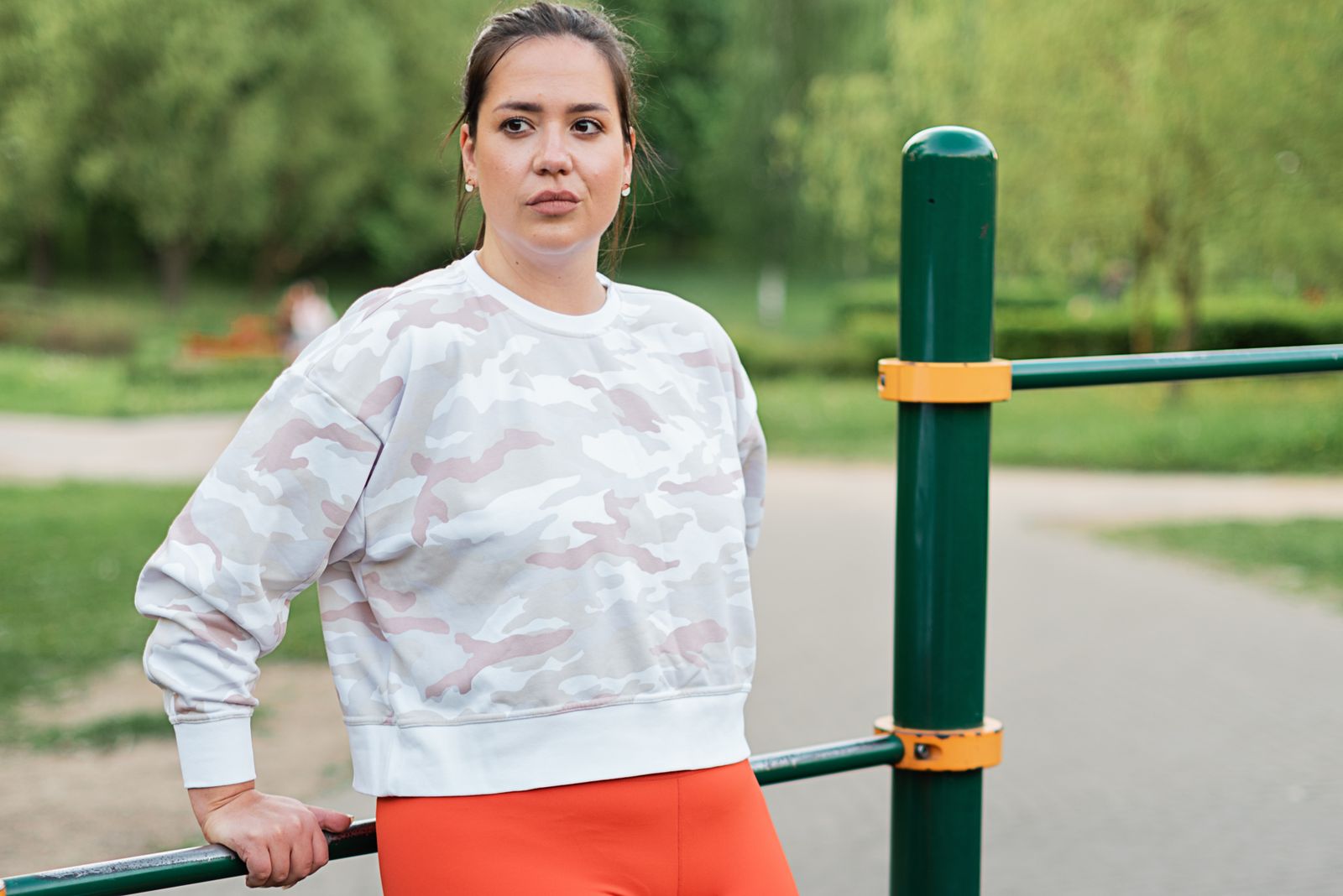
Identity is not only personal. We also see ourselves as members of groups: a family, a team, a community, a profession. A 2024 meta-analysis of 115 articles and more than 112,000 participants found a small but positive association between identifying with a group and health behaviour [3]. The link was stronger when the group identity was itself related to health, such as being part of a walking group or a sports club, and for positive behaviours [3].
In practice, belonging to a group whose norms include the habit you want can make that habit feel more like "what people like us do".
How to stop undoing your progress
These ideas are applications of the research above, not a tested programme. They aim to make your actions and your self-image point in the same direction.
- Notice your identity statements. Pay attention to phrases like "I'm not a morning person" or "I always fail at diets". They often predict behaviour more than any plan does.
- Choose a "becoming" identity. Instead of "I'm on a diet", try "I'm becoming someone who cooks most meals" or "I'm someone who moves every day". Keep it specific and believable.
- Cast small votes. Each repeated action is evidence for the new identity. A 10-minute walk counts. Because habit and identity seem to reinforce each other [1], consistency matters more than size.
- Picture your future self. Spend a few minutes describing the person you want to be in a year: what they eat, how they move, how they feel. Possible-self exercises were one of the approaches reviewed [2].
- Build confidence and a plan. Self-efficacy and planning were among the factors linked to change [2]. Decide when and where you will act, and start with steps you are confident you can take.
- Find your people. A class, a walking group or a friend with similar goals can make the habit part of a shared identity [3].
- Treat slips as data, not verdicts. One missed day does not cancel who you are becoming. Ask what got in the way, adjust, and continue.
Practical takeaways
- What looks like self-sabotage is often a gap between new actions and an old self-image.
- Habit and identity are strongly linked, and the relationship may work in both directions [1].
- Identity-focused interventions showed positive effects in nearly half of the studies reviewed, with no negative effects [2].
- Identifying with a health-related group is linked to healthier behaviour [3].
- Small, repeated actions help build the identity that keeps them going.
Build the person, one habit at a time
Lasting change rarely comes from one big decision. Viivaa helps you build healthy habits one small step at a time, so progress feels steady and sustainable.
This article is for general information only and is not medical or psychological advice. If patterns of self-defeating behaviour are affecting your health or wellbeing, consider speaking with a doctor or a mental health professional.
References
- Zhu L, Tao Y, Guo Y, et al. The relationship between habit and identity in health behaviors: a systematic review and three-level meta-analysis. Appl Psychol Health Well Being. 2025;17(2):e70017. https://doi.org/10.1111/aphw.70017
- van Vliet MHM, Penfornis KM, Gebhardt WA, et al. The effect of identity-related interventions on physical activity- and smoking-related identities and behavior: a mixed-methods systematic review. Syst Rev. 2026;15(1):106. https://doi.org/10.1186/s13643-026-03103-2
- de Hoog N, Pat-El R. Social identity and health-related behavior: a systematic review and meta-analysis. Soc Sci Med. 2024;344:116629. https://doi.org/10.1016/j.socscimed.2024.116629