
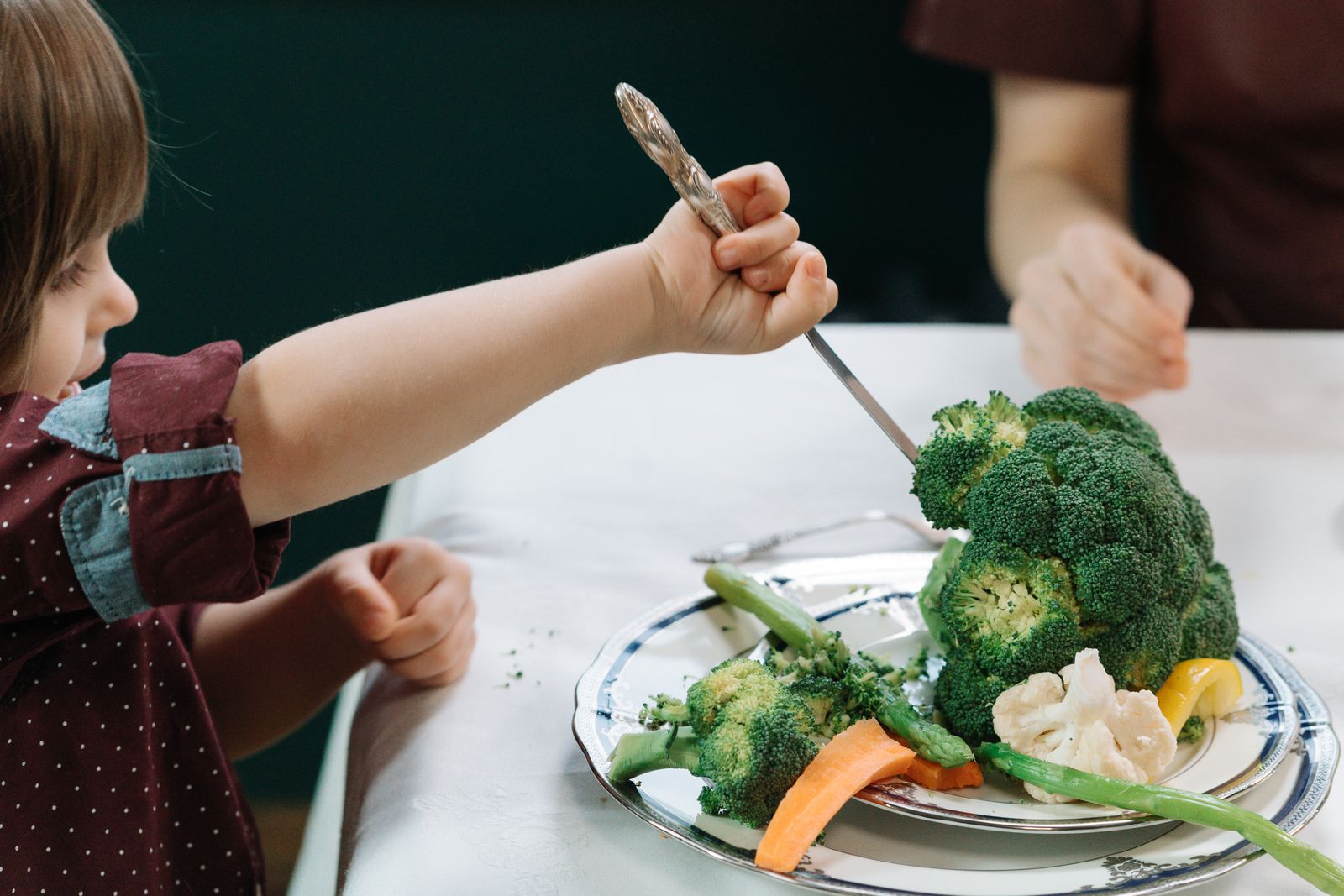
Most of us have a list of foods we "just don't like". Often it includes vegetables with a bitter edge, such as broccoli, rocket, kale or grapefruit. It's easy to treat those dislikes as fixed, as if they were written into our DNA.
The research says something more hopeful. Food preferences are partly learned, and what has been learned can change. This article looks at what studies show about repeated tasting, why bitter foods are a special case, and how to use that knowledge at home.
Why the first bites are the hardest
Humans are wary of unfamiliar foods. That caution made sense for our ancestors, because bitterness can signal a harmful substance. In modern life, it mostly means that a new or bitter food tastes "wrong" the first few times we try it.
The good news is that familiarity changes the experience. Each time we taste a food and nothing bad happens, the brain gathers evidence that it's safe. Over time, the same flavour can go from unpleasant to neutral to enjoyable.
How many tries does it take?
A well-designed study in Denmark tested this with 159 children aged 3 to 6 and a vegetable most had never eaten: daikon, a mild white radish [1]. Kindergarten groups were offered daikon seven times, either twice a week, once a week or once every two weeks, and were compared with a control group that tasted it only during test sessions.
The results were encouraging [1]:
- Liking and intake of daikon increased significantly in every group, including the control group.
- Intake rose until about the fourth exposure, then levelled off.
- How often the tastings happened didn't matter much: all three schedules worked.
- Even the small number of tastings in the control group improved liking and intake over six months.
In other words, it wasn't about finding a perfect schedule. It was about tasting the food more than once, in small amounts, without pressure. The study didn't find that learning to like daikon automatically made children like other vegetables, so each new food may need its own small series of tries [1].
Adults can retrain their taste too
Children aren't the only ones whose preferences shift. In a study with adults, participants drank a bittersweet commercial beverage once a day for seven days in their own everyday setting [2]. When they returned to the lab, their liking ratings for the drink had risen by 68%, while their ratings of comparison drinks they hadn't been exposed to stayed the same.
The researchers also tested whether health information helped. Telling people the drink was good for them didn't change how it tasted to them, but it did tend to increase how willing they were to drink it [2]. Knowing why a food is worth eating may get you to the table, but it's repeated tasting that changes the flavour experience itself.
Bitter foods are a special case
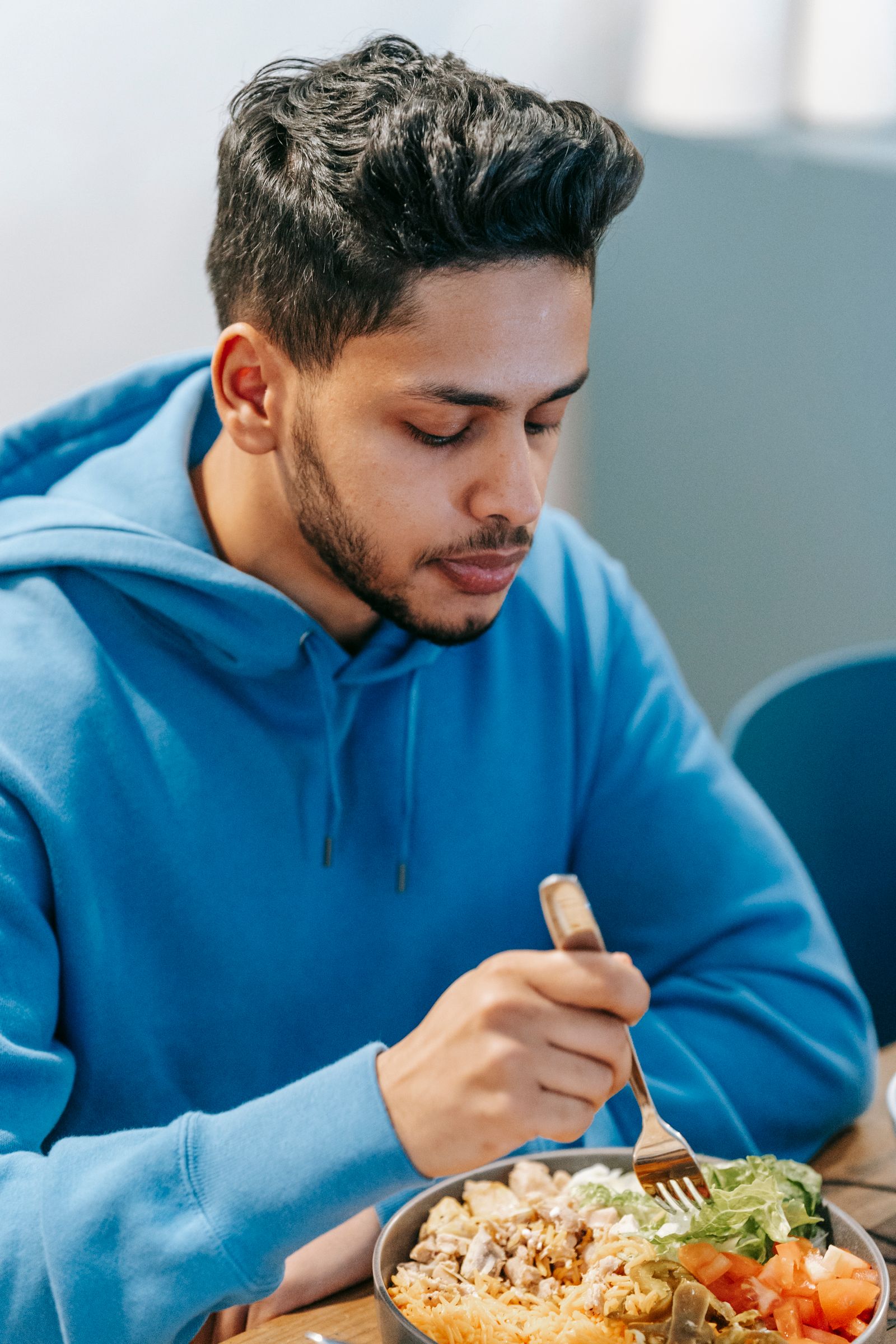
Not all bitterness is equal. Researchers in Japan measured how people respond to eight bitter compounds commonly found in foods, recording the lowest concentration at which each could be detected and the point at which people rejected it [3]. Tolerance varied widely from one compound to another, and some compounds were accepted at concentrations people could clearly taste.
That tolerance didn't follow a simple rule. It wasn't explained by the compound's nutritional value or by which bitter taste receptors it activated. The authors concluded that how much bitterness we accept depends on a complex mix of the taste itself and how we think about it [3]. That's one reason context, expectations and familiarity matter so much.
Your body learns from what happens after you eat
Taste on the tongue isn't the whole story. In a well-known experiment, mice that had been bred without the ability to taste sweetness still developed a strong preference for sugar water over plain water [4]. They learned it from the calories alone. Sugar intake still released dopamine in a reward area of their brains, even though they couldn't taste it.
This was an animal study, so it can't be applied directly to people. But it supports a broader idea also seen in the human beverage study: we partly learn to like foods because of how we feel after eating them, not only because of their taste [2,4]. A vegetable eaten as part of a satisfying meal, rather than on its own as a chore, may be easier to learn to enjoy.
A practical taste-training plan
Here's how to put this research into practice, for yourself or your family:
- Pick one food at a time. Choose something you'd like to eat more of, such as spinach, broccoli or lentils.
- Start small. A few bites is enough. In the children's study, small tastings were enough to change liking [1].
- Aim for repeated tries. Plan for at least four to seven tastings over a few weeks before deciding whether you like it [1].
- Pair it with foods you already enjoy. Add the new vegetable to a familiar dish, like a soup, stir-fry or omelette, so it's part of a satisfying meal.
- Try different preparations. Roasting, grilling or adding a little olive oil, lemon or cheese can soften bitterness while you adjust.
- Remove pressure. For children especially, offer without forcing. Let them see you eating it too.
- Notice the change. Each time, ask yourself: is this a bit more acceptable than last time?
Practical takeaways
- Food dislikes are often learned, which means they can be relearned.
- Liking tends to increase with repeated tasting; in one study, intake rose until about the fourth exposure [1].
- Adults' liking for a bitter drink increased by 68% after a week of daily tasting [2].
- Health information can make you more willing to try a food, but tasting is what changes the flavour experience.
- Bitter tolerance varies by compound and is shaped by expectations, not only by taste receptors [3].
Small, repeated steps
Expanding what you enjoy eating is a habit like any other: it grows with small, consistent steps. Viivaa helps you build healthy habits one step at a time, so new routines feel manageable and stick.
This article is for general information only and isn't medical advice. If you or your child has a very limited diet, strong aversions to many foods, or a feeding or eating difficulty, please talk to your doctor or a registered dietitian.
References
- Karagiannaki K, Ritz C, Jensen LGH, et al. Optimising repeated exposure: determining optimal exposure frequency for introducing a novel vegetable among children. Foods. 2021;10(5):913. https://doi.org/10.3390/foods10050913
- Stein LJ, Nagai H, Nakagawa M, Beauchamp GK. Effects of repeated exposure and health-related information on hedonic evaluation and acceptance of a bitter beverage. Appetite. 2003;40(2):119–129. https://doi.org/10.1016/S0195-6663(02)00173-3
- Mura E, Yagi M, Yokota K, et al. Tolerance of bitter stimuli and attenuation/accumulation of their bitterness in humans. Biosci Biotechnol Biochem. 2018;82(9):1539–1549. https://doi.org/10.1080/09168451.2018.1484273
- de Araujo IE, Oliveira-Maia AJ, Sotnikova TD, et al. Food reward in the absence of taste receptor signaling. Neuron. 2008;57(6):930–941. https://doi.org/10.1016/j.neuron.2008.01.032