

You've probably heard it: do something for 21 days and it becomes a habit. It's a tidy number. It fits nicely on a poster. And if you've ever hit day 22 still having to drag yourself to the thing, you may have wondered what you did wrong.
The answer: probably nothing. The research on how habits actually form tells a more realistic, and honestly more forgiving, story.
What the research actually found
One of the best-known studies on everyday habit formation was published by researchers at University College London [1]. They asked 96 volunteers to pick one eating, drinking or activity behaviour and do it every day in the same situation, for example "after breakfast," for 12 weeks [1]. Examples included eating a piece of fruit with lunch, drinking a bottle of water with lunch, or running for 15 minutes before dinner [1].
Each day, participants rated how automatic the behaviour felt, meaning how much it happened without having to think about it [1]. The researchers then modelled how that sense of automaticity grew over time for each person.
The results [1]:
- 82 participants gave enough data to analyse, and for 39 of them the model fitted well.
- Among those 39, the median time to reach 95% of their maximum automaticity was 66 days.
- The range was huge: from 18 days to 254 days.
So the honest answer to "how long does it take to form a habit?" is: it depends, often longer than three weeks, and sometimes much longer. Because the study itself lasted 84 days, the longer times are estimates from each person's fitted curve rather than observed finish lines, so treat the upper end as approximate.
Why "21 days" is too simple
The 21-day idea isn't wrong because it's too short for everyone. In the UCL study, a few people got there in under three weeks [1]. It's too simple because it implies one number fits everyone and every behaviour.
A few factors seem to matter:
The type of habit. Drinking behaviours were done more often than exercise behaviours, and those in the exercise group took about one and a half times longer to reach their plateau than the other groups [1]. The difference wasn't statistically significant, so it's a hint rather than a rule, but it fits the idea that more complex behaviours take longer to become automatic [1].
Consistency. People who performed the behaviour more consistently tended to show a clearer habit-forming pattern [1]. The authors also noted that about half the participants didn't do the behaviour consistently enough to reach habit status, even though they were motivated [1].
The curve shape. Automaticity grew fastest in the early days and then levelled off [1]. Early repetitions give you the biggest boost, which is good news for motivation.
The best news: missing a day doesn't ruin it
Here's the finding we'd put on the poster instead. In the UCL study, missing one opportunity to do the behaviour did not materially affect the habit-forming process [1].
That matters, because one of the most common ways habits fall apart is the "I missed Monday, so I've blown it" spiral. The research suggests a single slip is a blip, not a reset. What counts is getting back to it.
Repetition plus a stable context
The study's core message is simple: when you repeat a behaviour in a consistent context, it gradually becomes more automatic [1]. The "context" is the cue: a time, a place or something you already do.
Some examples:
- After I pour my morning coffee, I drink a glass of water.
- When I get home from work, I put on my walking shoes.
- After dinner, I prep tomorrow's lunch.
Linking the new behaviour to an existing anchor removes a decision from your day, and fewer decisions means less effort.
Plan for hard days with a "minimum version"
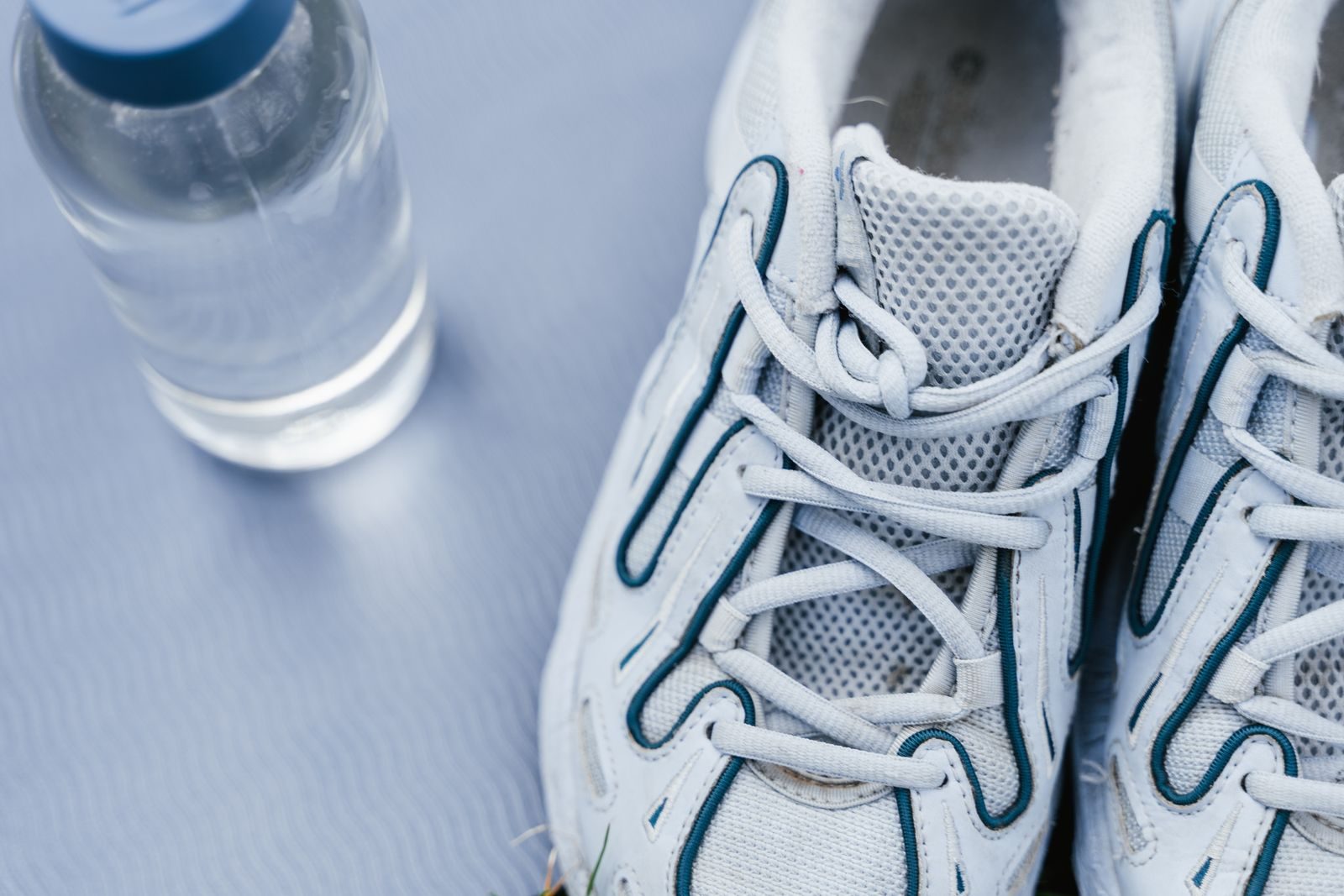
Life doesn't always cooperate. Work runs late, kids get sick, sleep goes sideways. Since consistency matters more than intensity, it helps to decide in advance what the smallest acceptable version of your habit looks like.
- Instead of a 30-minute walk: a 5-minute walk around the block.
- Instead of a full home-cooked dinner: adding one vegetable to whatever you're eating.
- Instead of a full stretching routine: two stretches before bed.
The minimum version keeps the cue and the routine alive, even when the full version isn't realistic.
Don't forget sleep
Habits don't happen in a vacuum, and sleep is one of the quiet forces behind everything else. A 2022 systematic review and meta-analysis of randomized controlled trials looked at how disrupting sleep affects insulin sensitivity, a key part of how the body handles blood sugar [2]. Its main meta-analysis pooled 21 sleep restriction studies, and sleep restriction reduced insulin sensitivity [2]. Circadian misalignment (sleeping and eating out of sync with your body clock) and suppressing deep, slow-wave sleep also had negative effects [2].
The authors concluded that the duration, quality and timing of sleep are all essential for metabolic function and type 2 diabetes risk [2]. Protecting your sleep is a habit worth building in its own right, and it may make your other habits easier too.
Practical takeaways
- Expect weeks to months, not days. A median of 66 days is a better mental model than 21 [1].
- Pick one habit and a clear cue. Attach it to something you already do daily.
- Start small. Simple behaviours tend to become automatic faster.
- Define your minimum version. Decide now what counts on a hard day.
- Don't panic over a missed day. One slip didn't derail habit formation in the research [1].
- Protect your sleep. Sleep restriction reduces insulin sensitivity [2], and good sleep supports everything else.
Building habits that last
Habits grow through small, repeated wins, and it helps to see them adding up. Viivaa helps you build these habits one small step at a time, so they feel doable and stick around for the long run.
This article is for general information only and isn't medical advice. Please talk to your doctor or another qualified health professional about your individual health, sleep, or any changes to your diet or activity.
References
- Lally P, van Jaarsveld CHM, Potts HWW, Wardle J. How are habits formed: modelling habit formation in the real world. Eur J Soc Psychol. 2010;40(6):998–1009. https://doi.org/10.1002/ejsp.674
- Sondrup N, Termannsen AD, Eriksen JN, et al. Effects of sleep manipulation on markers of insulin sensitivity: a systematic review and meta-analysis of randomized controlled trials. Sleep Med Rev. 2022;62:101594. https://doi.org/10.1016/j.smrv.2022.101594