
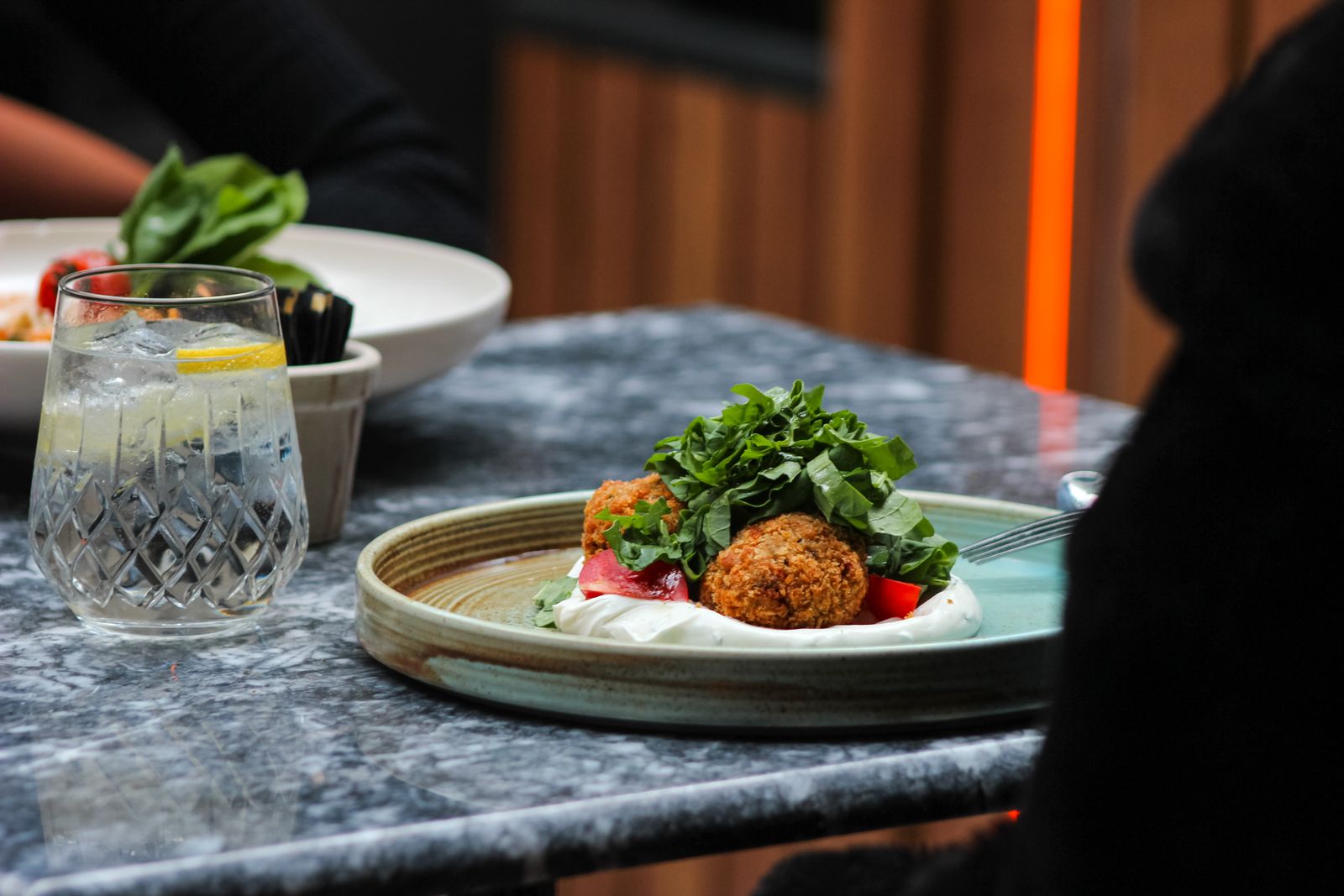
"What would you like to drink?" It's a question we hear at almost every meal. And it comes with plenty of advice attached: don't drink water while eating because it dilutes your stomach acid; drink a big glass before meals to lose weight; fruit juice is a healthy choice because it's made from fruit.
Let's look at what the research says about each of these.
Does water with meals dilute stomach acid?
Your stomach is acidic, and acid helps break down proteins and protects against microbes. So it's reasonable to ask whether a glass of water might water it down.
A small crossover study tested this directly in 12 healthy adults [1]. After drinking a glass of water (200 ml), gastric pH rose above 4 (less acidic) within one minute in 10 of the 12 participants. But the effect was brief: pH stayed above 4 for only about 3 minutes [1]. The study was designed to compare water with antacids and acid-reducing medicines, not to test digestion, so it doesn't tell us whether drinking water affects how well food is digested.
What we do know is that the stomach is very responsive to food. A classic review of diet and gastric secretion explains that meals are a strong stimulus for acid secretion [2]. Protein initially buffers stomach acid, raising the pH, and then stimulates more acid as the meal empties. Fat delays the acid response. Interestingly, the lowest stomach pH in humans tends to occur in the early morning hours, not during meals [2].
In other words, the stomach adjusts its acid output to what you eat, and a glass of water causes only a short-lived change in pH.
How your stomach makes room for a meal
When you eat, the upper part of your stomach relaxes to make room for food without a big rise in pressure. This is called gastric accommodation [3]. It's controlled mainly by the vagus nerve and by feedback from nutrients reaching the small intestine.
When accommodation doesn't work properly, people may feel full early, bloated or uncomfortable after eating, a group of symptoms called dyspepsia [3]. Doctors sometimes use a "water load" drinking test to assess how well the stomach accommodates [3]. If large amounts of liquid with meals make you uncomfortable, it may help to sip rather than gulp, and to talk to your doctor if symptoms are frequent.
Can water before meals help with weight loss?
This idea has some support. In a 12-week trial, 48 adults aged 55 to 75 with overweight or obesity followed a calorie-reduced diet [4]. Half also drank 500 ml of water before each main meal.
The results [4]:
- The water group lost about 2 kg more than the diet-only group over 12 weeks.
- Their weight declined about 44% faster.
- At the start, drinking water before a test meal reduced how much people ate at that meal (498 vs 541 kcal). After 12 weeks, the difference was smaller and no longer statistically significant.
It's one relatively small trial in older adults, combined with a diet, so it doesn't show that water alone causes weight loss. Still, a glass or two of water before meals is a simple, low-cost habit for most healthy people.
Do we compensate for calories from drinks?
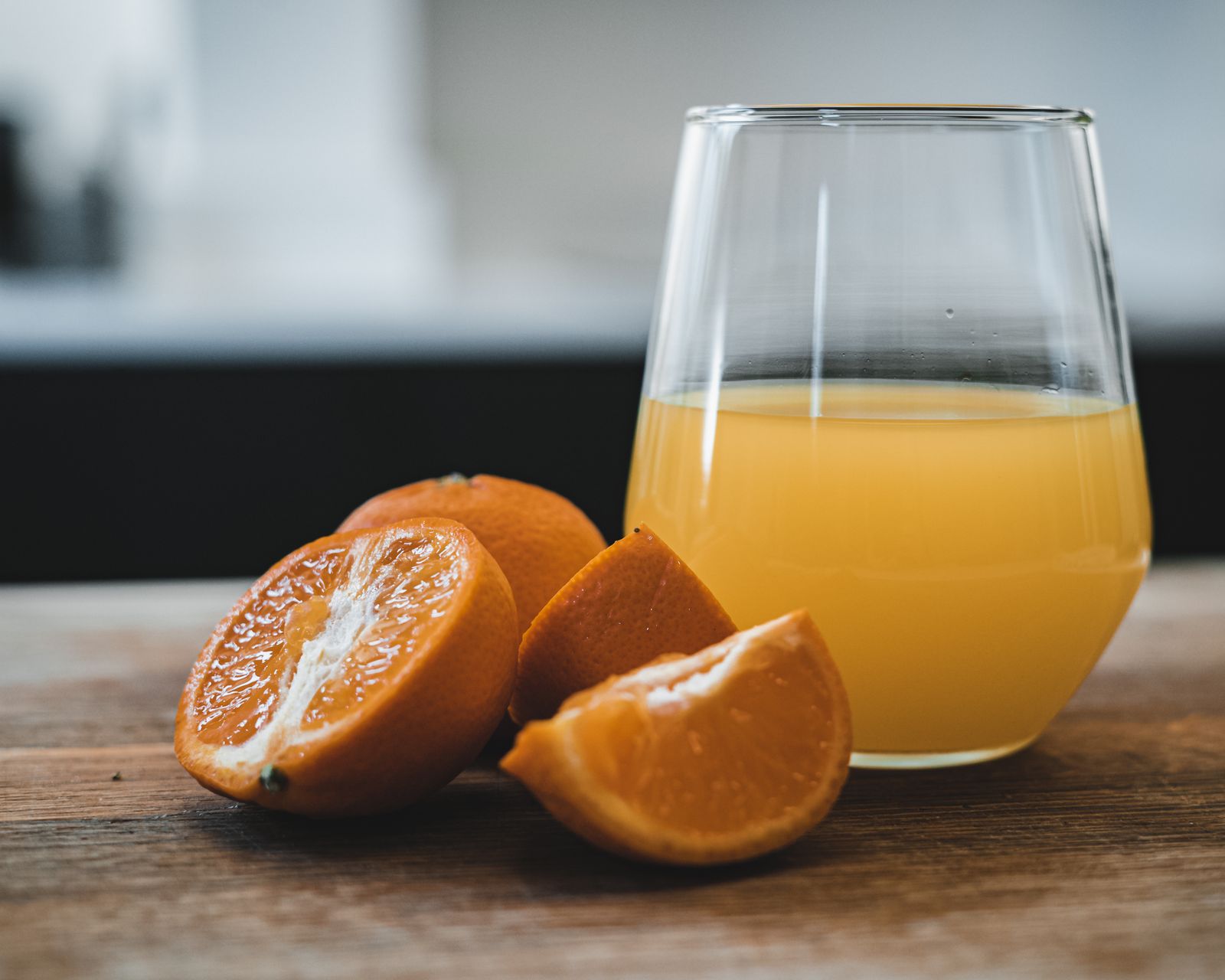
When we eat a snack, we often eat a little less at the next meal. But drinks seem to work differently. A systematic review of 48 publications on "preload" studies, in which people eat or drink something before a meal, found that compensation varied enormously between studies [5]. Calories from liquids were often poorly compensated, which means they tended to add to, rather than replace, what people ate later [5].
That's one reason why calorie-containing drinks, including juice, deserve some attention.
Is 100% fruit juice healthy?
Fruit juice has a healthy image, and it does contain some vitamins. But it also delivers sugar in liquid form, without most of the fibre of whole fruit.
A 2024 systematic review and meta-analysis pooled 42 studies on 100% fruit juice and body weight [6]:
- Children: each extra daily serving of 100% juice was associated with a small increase in BMI (0.03 units) over time.
- Adults (cohort studies): in studies that didn't account for total calorie intake, juice was linked with more weight gain (0.21 kg per daily serving). In studies that did account for calories, this link disappeared (−0.08 kg), suggesting the extra calories explain the weight gain.
- Adults (randomised trials): there was no significant effect on body weight, but the results were imprecise.
The authors concluded that their findings support guidance to limit fruit juice to avoid excess calories and weight gain [6].
What to drink with your meals
- Water is a good default. Drinking a glass with your meal causes only a brief change in stomach pH [1].
- Try a glass before meals if you're trying to eat less, especially alongside other changes [4].
- Sip, don't gulp, if large volumes make you feel uncomfortably full [3].
- Choose whole fruit over juice most of the time. If you enjoy juice, keep it to a small glass.
- Count liquid calories. Juice, sweetened drinks and milky coffees can add up without making you feel full [5].
- Try unsweetened alternatives such as sparkling water with lemon, or herbal tea.
Practical takeaways
- A glass of water raises stomach pH for only about 3 minutes [1], and meals strongly stimulate acid secretion [2].
- In one 12-week trial, 500 ml of water before meals plus a calorie-reduced diet led to about 2 kg more weight loss [4].
- Calories from drinks are often poorly compensated at later meals [5].
- 100% fruit juice is linked with weight gain in children and, through extra calories, in adults [6].
- Whole fruit and water are generally better everyday choices than juice.
Small swaps, steady progress
Changing what's in your glass is one of the simplest habits to start. Viivaa helps you build healthy habits one small step at a time, so progress feels steady and sustainable.
This article is for general information only and isn't medical advice. If you have heart, kidney or liver disease, have been told to limit fluids, have reflux or digestive symptoms, or have diabetes, please talk to your doctor before changing how much you drink.
References
- Karamanolis G, Theofanidou I, Yiasemidou M, Giannoulis E, Triantafyllou K, Ladas SD. A glass of water immediately increases gastric pH in healthy subjects. Dig Dis Sci. 2008;53(12):3128–3132. https://doi.org/10.1007/s10620-008-0301-3
- Brooks FP. Effect of diet on gastric secretion. Am J Clin Nutr. 1985;42(5 Suppl):1006–1019. https://doi.org/10.1093/ajcn/42.5.1006
- Febo-Rodriguez L, Chumpitazi BP, Sher AC, Shulman RJ. Gastric accommodation: physiology, diagnostic modalities, clinical relevance, and therapies. Neurogastroenterol Motil. 2021;33(12):e14213. https://doi.org/10.1111/nmo.14213
- Dennis EA, Dengo AL, Comber DL, et al. Water consumption increases weight loss during a hypocaloric diet intervention in middle-aged and older adults. Obesity (Silver Spring). 2010;18(2):300–307. https://doi.org/10.1038/oby.2009.235
- Almiron-Roig E, Palla L, Guest K, et al. Factors that determine energy compensation: a systematic review of preload studies. Nutr Rev. 2013;71(7):458–473. https://doi.org/10.1111/nure.12048
- Nguyen M, Jarvis SE, Chiavaroli L, et al. Consumption of 100% fruit juice and body weight in children and adults: a systematic review and meta-analysis. JAMA Pediatr. 2024;178(3):237–246. https://doi.org/10.1001/jamapediatrics.2023.6124