
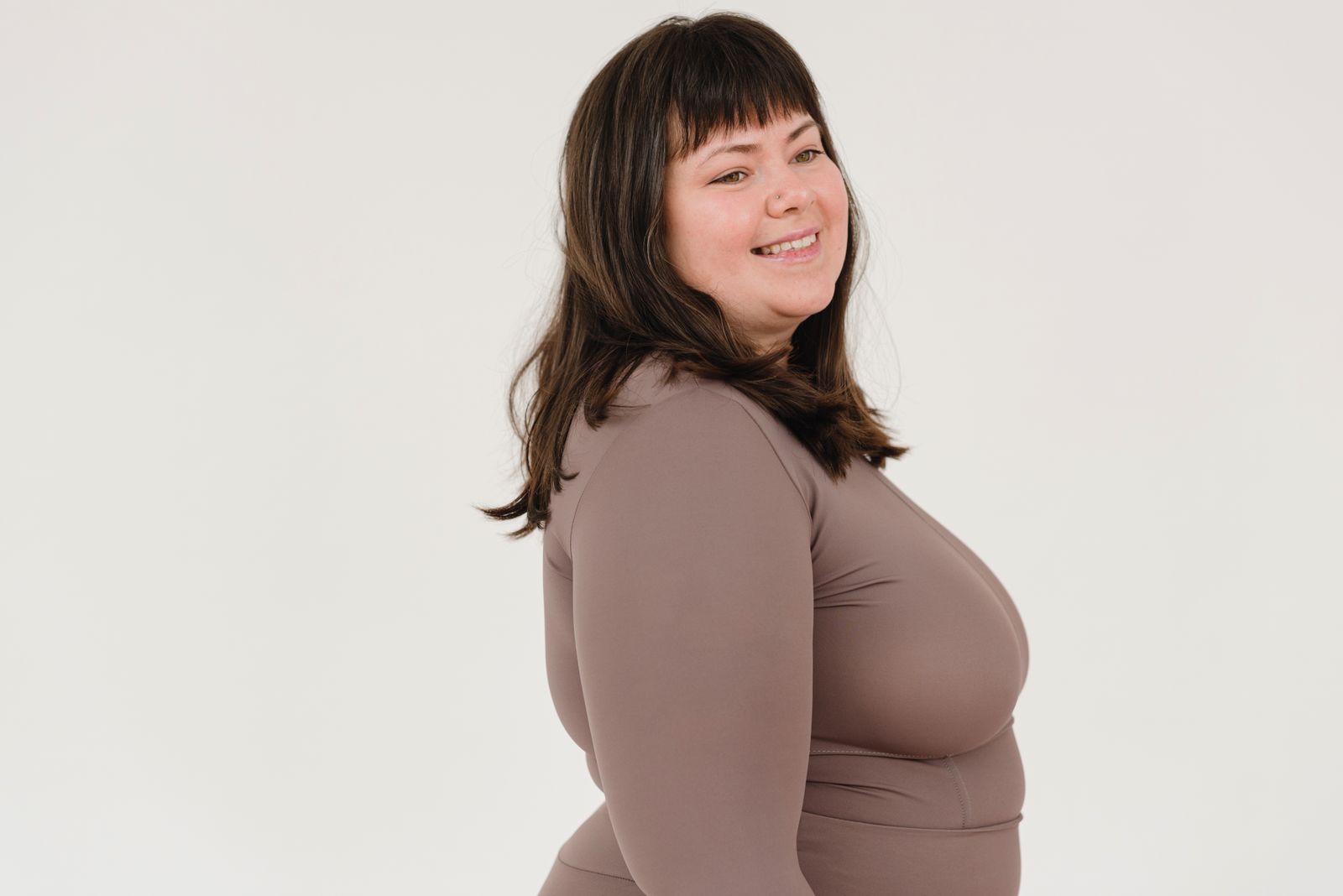
Many people put feeling good about their bodies on hold. "I'll buy new clothes when I reach my goal." "I'll go to the beach next year." "I'll like what I see once I've lost the weight." The trouble is that a body in the middle of change can feel like a project that is never finished, and the waiting can last for years.
Research on body image suggests a different approach. How you relate to your body, and how much of your self-worth rides on appearance, affects wellbeing on its own terms. Better still, it is something you can work on now, whatever your size or stage.
When self-worth depends on how you look
Psychologists use the term appearance-contingent self-worth to describe staking your overall sense of value on your physical appearance. When self-worth works this way, every glance in the mirror or reading on the scale can feel like a verdict on you as a person.
In two studies of women, one cross-sectional (208 participants) and one following people over a short period (191 participants), researchers examined how this pattern connects to self-esteem [1]. Women whose self-worth depended more on appearance tended to self-objectify more, meaning they viewed their bodies from the outside, as objects to be looked at. That, in turn, was linked to more appearance anxiety and, ultimately, lower self-esteem [1].
The chain matters because it suggests a point of change. If self-worth rests on many things beyond appearance, such as your relationships, skills, values and health, the mirror loses some of its power.
Body appreciation: a different way to relate to your body
Positive body image is not simply the absence of negative body image. One of its best-studied forms is body appreciation: accepting your body, holding favourable attitudes toward it and respecting it, including the parts you would like to change.
A 2022 meta-analysis brought together 240 papers on body appreciation and 35 different psychological measures [2]. Body appreciation was associated with:
- Less eating pathology and dietary restraint.
- Less body surveillance (constantly checking how you look).
- Lower depression and anxiety.
- Higher self-esteem and self-compassion.
Importantly, these associations remained even after accounting for negative body image [2]. In other words, appreciating your body seems to add something on its own, beyond simply disliking it less.
Most of these studies took a snapshot at a single point in time, and only eight followed people over time [2]. So we cannot say for certain that body appreciation causes better wellbeing. The authors' qualitative review of the longer-term studies suggests it may help over time [2].

Self-compassion: treating yourself like a friend
Self-compassion means meeting your own struggles with the kindness you would offer a friend, recognising that difficulty is part of being human, and noticing painful feelings without being swept away by them.
A 2020 meta-analysis of 59 studies looked at self-compassion in relation to eating and body image [3]. Higher self-compassion was linked to:
- Lower eating pathology (r = −0.34).
- Fewer body image concerns (r = −0.45).
- More positive body image (r = 0.52).
The review also found that self-compassion interventions worked better than control conditions for both eating pathology and body image concerns [3]. This is one of the clearer signs in this field that a relationship with your body can be improved through practice.
Ways to build a kinder relationship with your body
These suggestions apply the findings above. They are not a replacement for professional support if body image is causing you significant distress.
- Widen your sources of self-worth. List qualities and roles you value in yourself that have nothing to do with appearance. Revisit the list when a weigh-in or photo knocks you off balance.
- Notice body checking. Frequent mirror checks, pinching or comparing photos keep attention on appearance. Try reducing them gradually rather than all at once.
- Appreciate what your body does. Thank your body for a walk, a hug, carrying the shopping or getting through a long day. Function is a natural way into body appreciation.
- Talk to yourself as you would to a friend. When you catch a harsh thought, ask what you would say to someone you love in the same situation [3].
- Stop postponing your life. Wear the clothes, take the photo, go to the pool. Waiting for a future body keeps self-worth tied to appearance.
- Curate what you see. If certain feeds or accounts leave you feeling worse about your body, it is reasonable to mute or unfollow them.
- Keep health goals separate from self-worth. You can work on eating well and moving more because you care for your body, not because it needs to earn your respect first.
Practical takeaways
- Basing self-worth on appearance is linked to self-objectification, appearance anxiety and lower self-esteem [1].
- Body appreciation is associated with less disordered eating, less anxiety and depression, and higher self-esteem [2].
- Self-compassion is linked to better body image, and self-compassion interventions have shown benefits [3].
- You do not need to reach a goal weight to start relating to your body more kindly.
Care for the body you have now
Healthy habits are easier to keep when they come from care rather than criticism. Viivaa helps you build healthy habits one small step at a time, so progress feels steady and sustainable.
This article is for general information only and is not medical or psychological advice. If thoughts about your body or eating are causing you distress, or you are worried about disordered eating, please speak with a doctor or a mental health professional.
References
- Adams KE, Tyler JM, Calogero R, Lee J. Exploring the relationship between appearance-contingent self-worth and self-esteem: the roles of self-objectification and appearance anxiety. Body Image. 2017;23:176–182. https://doi.org/10.1016/j.bodyim.2017.10.004
- Linardon J, McClure Z, Tylka TL, Fuller-Tyszkiewicz M. Body appreciation and its psychological correlates: a systematic review and meta-analysis. Body Image. 2022;42:287–296. https://doi.org/10.1016/j.bodyim.2022.07.003
- Turk F, Waller G. Is self-compassion relevant to the pathology and treatment of eating and body image concerns? A systematic review and meta-analysis. Clin Psychol Rev. 2020;79:101856. https://doi.org/10.1016/j.cpr.2020.101856